The Right Way to Dress a Window Without Overcrowding the Space
Window treatments can make a room feel finished, balanced, and intentional, but too much fabric, heavy hardware, or the wrong mounting height can make a space feel crowded. The goal is not to cover the window with as much as possible. The goal is to frame the view, control light, protect privacy, and support the room’s design.
For luxury homes in Thousand Oaks, Malibu, Pacific Palisades, Beverly Hills, and nearby areas, the best window treatments often feel quiet and tailored. Custom drapery, designer shades, and motorized window treatments can all work beautifully when they are selected with proportion, fabric, and function in mind.
Let’s explore the art of less-is-more when it comes to window styling.
1. Understand the Architecture First
Every window has a story. Its shape, size, trim, ceiling height, molding, and natural light all influence the best treatment choice. Before choosing fabric or hardware, take a moment to study the room. A large window may call for soft sheers to filter light beautifully, while a smaller window might benefit from a clean Roman shade or tailored drapery panels.
The key is to let the architecture guide the design. When window treatments work with the room instead of fighting against it, the final look feels calm and elevated.
Tip: Avoid stacking too many elements, such as valances, cornices, tiebacks, and heavy panels, unless the room truly calls for a more dramatic look. In modern and transitional interiors, simplicity often feels more intentional.
2. Mounting Height Matters
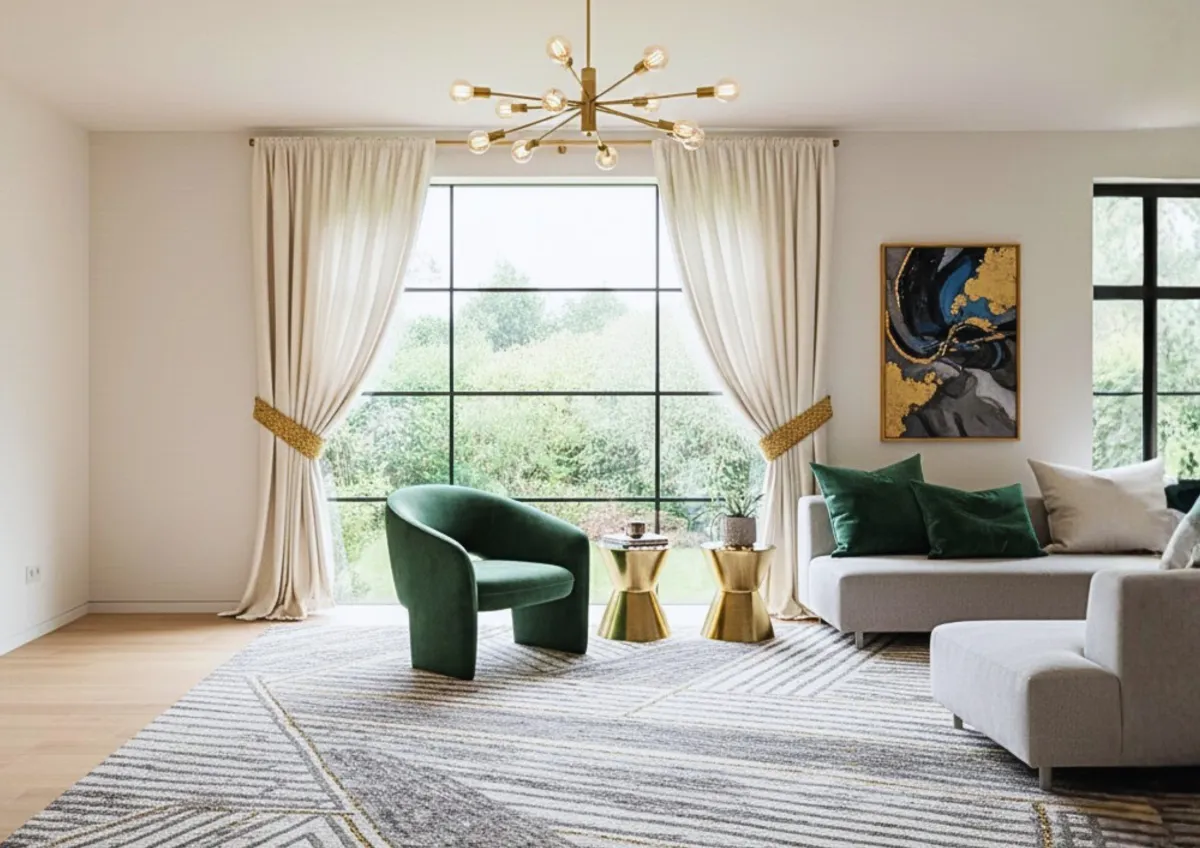
One of the smartest ways to avoid a crowded look is to mount drapery hardware higher than the window frame. Hanging drapery closer to the ceiling draws the eye upward and makes the room feel taller.
This approach also keeps the window treatment from competing with furniture, artwork, or architectural details below. Floor-to-ceiling drapery in a light fabric can add softness without adding visual weight.
Tip: Mount drapery high and wide when possible. This allows the fabric to frame the window instead of blocking natural light.
3. Let Fabric Speak Softly
Texture and movement often matter more than bold pattern. If the goal is a refined, uncluttered room, choose fabrics that add depth without overpowering the space. Linen, cotton blends, soft sheers, and light silks can add a graceful finish while keeping the design airy.
Neutral tones are often a safe and elegant choice, but color can still work beautifully when used with care. A soft warm gray, ivory, taupe, sand, or muted blue can support the room’s palette without stealing attention.
Tip: Use natural textures and soft tones to keep the space cohesive. If you want color, consider adding it through trim, pillows, art, or subtle drapery detailing.
4. Stick to Slim, Streamlined Hardware
Hardware can quietly make or break the look of a window. Oversized rods, bulky brackets, and heavy finials can create visual clutter, especially in rooms that already have strong architectural details.
Slim hardware in finishes like matte black, brushed nickel, soft brass, or bronze can feel polished without becoming distracting. The right hardware should support the treatment, not compete with it.
Tip: Choose hardware that blends with your home’s existing finishes, such as lighting, cabinet pulls, or door hardware.
5. Choose Tailored Treatments That Fit
Custom window treatments are especially helpful when the goal is balance. Off-the-shelf panels may be too short, too long, too narrow, or too full. That can make even a beautiful room feel unfinished.
Tailored treatments consider the exact window size, ceiling height, wall space, fabric weight, privacy needs, and light control goals. This is especially important for luxury homes where the details matter.
For rooms that need a cleaner look, consider designer shades, Roman shades, woven shades, or custom blinds. For a softer, more elegant finish, custom drapery may be the better choice.
Tip: Avoid treatments that puddle awkwardly or stop too soon. Proper length and fullness make the entire room feel more polished.
6. Consider Motorized Shades for a Cleaner Look
Motorized shades are a great choice for homeowners who want a streamlined design with modern function. They remove the need for cords and make it easy to control privacy and light throughout the day.
This can be especially helpful for large windows, tall windows, media rooms, bedrooms, and open living areas. Motorized shades can look sleek while still offering comfort, privacy, and convenience.
The Takeaway
Great design is not about adding more. It is about choosing better. A well-dressed window does not need to be covered with layers, heavy fabric, or oversized hardware to feel beautiful. The right treatment should frame the view, soften the room, control light, and support the overall design.
Homeowners throughout Thousand Oaks, Malibu, Pacific Palisades, Beverly Hills, and nearby communities often choose custom window treatments because they offer a tailored fit, better materials, and a more refined finish than ready-made options.
Need help choosing window treatments that feel elegant without overwhelming the room? Window Treatments by Grace offers custom drapery, designer shades, motorized shades, and tailored window covering guidance for luxury homes across Thousand Oaks, Malibu, Pacific Palisades, Beverly Hills, and nearby areas.
Schedule a free in-home consultation or call/text (805) 405-0248 to discuss your windows.
Frequently Asked Questions
What window treatments make a room look larger?
Floor-to-ceiling drapery, light fabrics, and properly mounted shades can make a room feel taller and more open.
Should drapes touch the floor?
Yes. In most polished interiors, drapery should lightly touch the floor or have a soft break.
Are motorized shades worth it?
Yes. Motorized shades add convenience, privacy, light control, and a clean look, especially for larger or hard-to-reach windows.
What fabric works best for custom drapery?
Linen, cotton blends, sheers, and soft textured fabrics are popular choices because they add elegance without feeling heavy.
Can window treatments help with privacy?
Yes. Shades, drapery, blinds, and layered treatments can all improve privacy while still supporting the room’s design.
How high should curtain rods be mounted?
In many rooms, rods look best when mounted closer to the ceiling instead of directly above the window frame.
