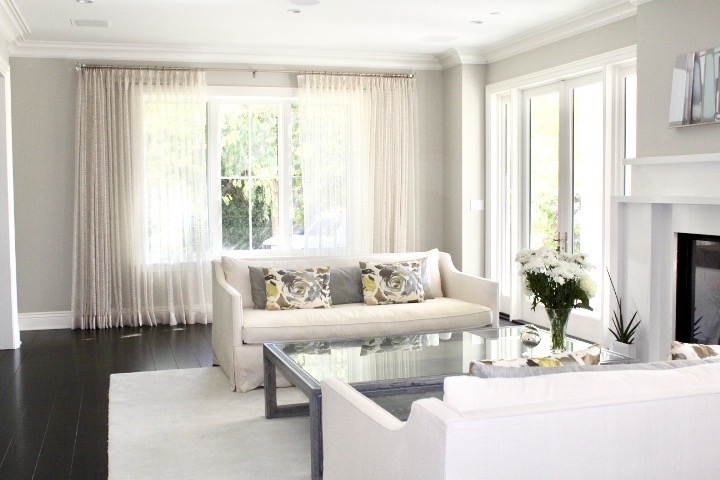
Custom vs. Ready-Made Drapery: Which Is Right for You?
Window treatments do more than frame a view. They soften light, protect your privacy, insulate your rooms, and quietly set the tone for everything else in the space. Yet when it's time to choose, most homeowners face the same fork in the road: pick up ready-made panels off the shelf, or invest in drapery made specifically for their windows.
Both options have their place. The right answer depends on your windows, your timeline, your budget, and how long you plan to live with the result. This guide walks through the differences that matter most, including fit, fabric, personalization, light control, and long-term value, so you can choose with confidence.
Fit and Finish: Where the Difference Shows First

Ready-Made Drapery: Standard Sizes for Standard Windows
Ready-made panels are mass-produced in a handful of common lengths and widths, typically 63", 84", 96", and 108". If your windows happen to match those dimensions, off-the-shelf panels can look perfectly presentable.
The challenge is that many windows don't. Older homes with tall ceilings, new builds with transom windows, bay windows, arched frames, and sliding doors all fall outside standard sizing. The result is familiar to anyone who has hung store-bought curtains: hems that hover awkwardly above the floor, panels too narrow to close fully, or fabric that puddles in a way that looks accidental rather than intentional.
Custom Drapery: Made to Your Measurements
Custom drapery is cut and sewn to the exact dimensions of your windows, down to the fraction of an inch. That precision matters most in situations like:
Floor-to-ceiling windows, where even an inch of miscalculation is visible across the whole wall
Bay and corner windows, which need panels and hardware that follow the angles of the frame
Rooms with uneven floors or ceilings (common in older homes), where a workroom can adjust each panel individually
Wide window walls, where you want panels that stack neatly off the glass when open
Custom also lets you choose how the drapery meets the floor: a crisp break just above it, a tailored kiss against it, or a deliberate, romantic puddle. That finished, architectural look people notice in designer interiors usually comes down to this one thing: the drapery fits. You can see examples of tailored drapery in real homes in our portfolio.
Fabric and Material Options
Ready-Made: You Choose from What's in Stock
With ready-made panels, your fabric options are whatever the retailer has on hand, often polyester blends and mass-market prints chosen for affordability and easy care. These fabrics can be a sensible choice for low-stakes spaces, but they tend to offer thinner drape, limited lining options, and less resistance to sun fading over time.
Custom: A Full Library of Fabrics, With Guidance
Custom drapery opens the door to a far wider range of materials:
Natural fibers such as linen, cotton, and wool for relaxed texture and beautiful drape
Silks and silk blends for formal rooms where sheen and body matter
Performance fabrics engineered to resist fading in sun-drenched rooms or handle humidity in kitchens and baths
Linings and interlinings, from light-filtering to full blackout, that improve insulation, protect the face fabric, and give panels a fuller, more substantial hang
Just as important, you're not choosing alone. A design professional can steer you toward fabrics that suit both your aesthetic and your reality. A family room with kids and pets calls for different material than a rarely used formal dining room. To get a feel for what's possible, explore our custom drapery services before your appointment.
Personalization and Design Impact

Ready-Made: One Size Fits Most
Off-the-shelf panels come as they are. Pleat style, header type, length, and hardware compatibility are all predetermined, so your design vision has to flex to fit the product, not the other way around.
Custom: Every Detail Is a Design Decision
With custom drapery, the details become opportunities:
Header styles: tailored pinch pleats, relaxed ripplefold, casual grommets, or soft goblet pleats, each giving the room a different character
Trims and banding: a contrast border or decorative tape can tie drapery into the room's palette and make simple fabric look considered
Functional linings: blackout for bedrooms and media rooms, thermal linings for drafty windows, sheer underlayers for daytime privacy
Hardware: rods, rings, finials, and finishes selected to complement your fixtures and architecture, or motorized options for hard-to-reach windows and effortless daily use
This is where drapery shifts from something you hang to something that's part of the room's architecture. Layering matters here too. Many designers pair drapery panels with designer shades for flexible light control throughout the day.
Light Control, Privacy, and Comfort

This is one of the most practical, and most overlooked, differences between the two options.
Ready-made panels are usually unlined or lightly lined, which limits how much light they block and how much insulation they provide. If you've ever hung "blackout" curtains from a big-box store and still watched sunlight leak around the edges, you've experienced the gap between the label and the result.
Custom drapery lets you match the treatment to the room's job:
Bedrooms: blackout linings sized generously beyond the window frame to minimize light gaps for better sleep
Living rooms: light-filtering linings or layered sheers that soften glare while keeping the room bright
Street-facing rooms: sheers or privacy linings that obscure the view in without darkening the space
Sun-exposed rooms: linings that protect flooring, furniture, and artwork from UV fading
Because custom panels are cut fuller and mounted precisely, they also close completely and seal better against drafts, a comfort difference you feel in both summer and winter.
Cost, Durability, and Long-Term Value
Ready-Made: Lower Cost, Shorter Horizon
There's no getting around it: ready-made panels cost less up front. That makes them a reasonable choice for rentals, staging, kids' rooms that will be redecorated soon, or any space where you need a quick, temporary solution. The trade-off is lifespan. Thinner fabrics, lighter construction, and imperfect fit mean they often fade, sag, or simply stop suiting the room within a few years.
Custom: Higher Investment, Longer Payoff
Custom drapery costs more because more goes into it: quality fabric, professional measurement, workroom construction, sturdy hardware, and expert installation. What you get in return:
Durability: well-constructed panels with proper linings resist fading and hold their shape for many years
Function that keeps working: hardware that glides smoothly and panels that close fully, year after year
A finish that elevates the whole room: often the difference between a space that feels "done" and one that feels almost done
Fewer replacements: one well-made set can outlast several rounds of off-the-shelf panels
A useful way to frame the decision: ready-made is a purchase; custom is an investment in how the room looks, feels, and functions over the long term.
Ready-Made vs. Custom Drapery at a Glance
Fit
Ready-made: Standard sizes; often too short, too narrow, or awkwardly long
Custom: Made to your windows' exact measurements
Fabric selection
Ready-made: Limited to in-stock options, often poly blends
Custom: Wide range of linens, silks, wools, and performance fabrics
Linings
Ready-made: Usually unlined or minimal
Custom: Light-filtering, blackout, thermal, or interlined
Personalization
Ready-made: Fixed pleat, length, and header styles
Custom: Full control over headers, trims, banding, and hardware
Light control and privacy
Ready-made: Basic; gaps and light leaks are common
Custom: Tailored to the room's purpose, with fuller coverage
Durability
Ready-made: Shorter lifespan; prone to fading and wear
Custom: Built to last with quality construction and materials
Upfront cost
Ready-made: Lower
Custom: Higher
Long-term value
Ready-made: May need repeated replacement
Custom: One investment that performs for years
Best for
Ready-made: Rentals, temporary spaces, and quick refreshes
Custom: Forever homes, unusual windows, and design-driven rooms
So Which Should You Choose?
Ready-made drapery makes sense when you're furnishing a temporary space, working within a tight budget, dressing standard-size windows, or planning to redecorate soon.
Custom drapery makes sense when your windows are anything other than standard, you care about light control and privacy performance, you want the room to feel intentionally designed, or you're investing in a home you plan to enjoy for years.
For many homeowners, the honest answer is a mix: ready-made in low-priority rooms, custom where it counts, like the primary bedroom, the living room, and the spaces where you actually live. And drapery is only one piece of the picture. Depending on the room, custom blinds or plantation shutters may pair with or even replace drapery in certain spaces. If you're weighing where custom will make the biggest difference in your home, learn about our consultation process and we'll walk you through it step by step.
Let's Find the Perfect Fit for Your Windows
The real difference between ready-made and custom isn't just the price tag. It's how your space feels every day: the way morning light filters in, the quiet of a properly darkened bedroom, the finished look of panels that fit exactly as intended.
If you're ready to explore drapery tailored to your windows, your fabric preferences, and the way you live, we'd love to help. A personalized consultation is a relaxed, no-pressure conversation about your space, your goals, and the options that fit them. We proudly serve homeowners throughout the Los Angeles area and surrounding service areas.
