
Smoke-Damaged Drapes: Should You Dry Clean or Replace Them? A Homeowner's Guide
Hello, and welcome. My name is Grace, and for the past 18 years I've helped homeowners across Pacific Palisades, Malibu, Beverly Hills, and Greater Los Angeles choose window treatments that are both beautiful and functional. In all those years, one truth has never changed: drapes are never just fabric. They frame your views, soften your light, and shape how your home feels.
If you are one of the thousands of homeowners affected by the Pacific Palisades and Malibu fires, please know my heart is with you. When wildfire smoke and its toxins reach a home, they often settle quietly into soft materials like drapery, and one of the most common questions I hear from homeowners afterward is: "Can my drapes be saved, or is it time to replace them?" This guide will walk you through that decision honestly, without pressure and without guesswork.
What Smoke Actually Does to Drapery Fabric
Drapes work a bit like a filter for your home. As smoke moves through a room, soot particles, odor compounds, and the chemical toxins carried in smoke can settle deep into the weave, not just on the surface.
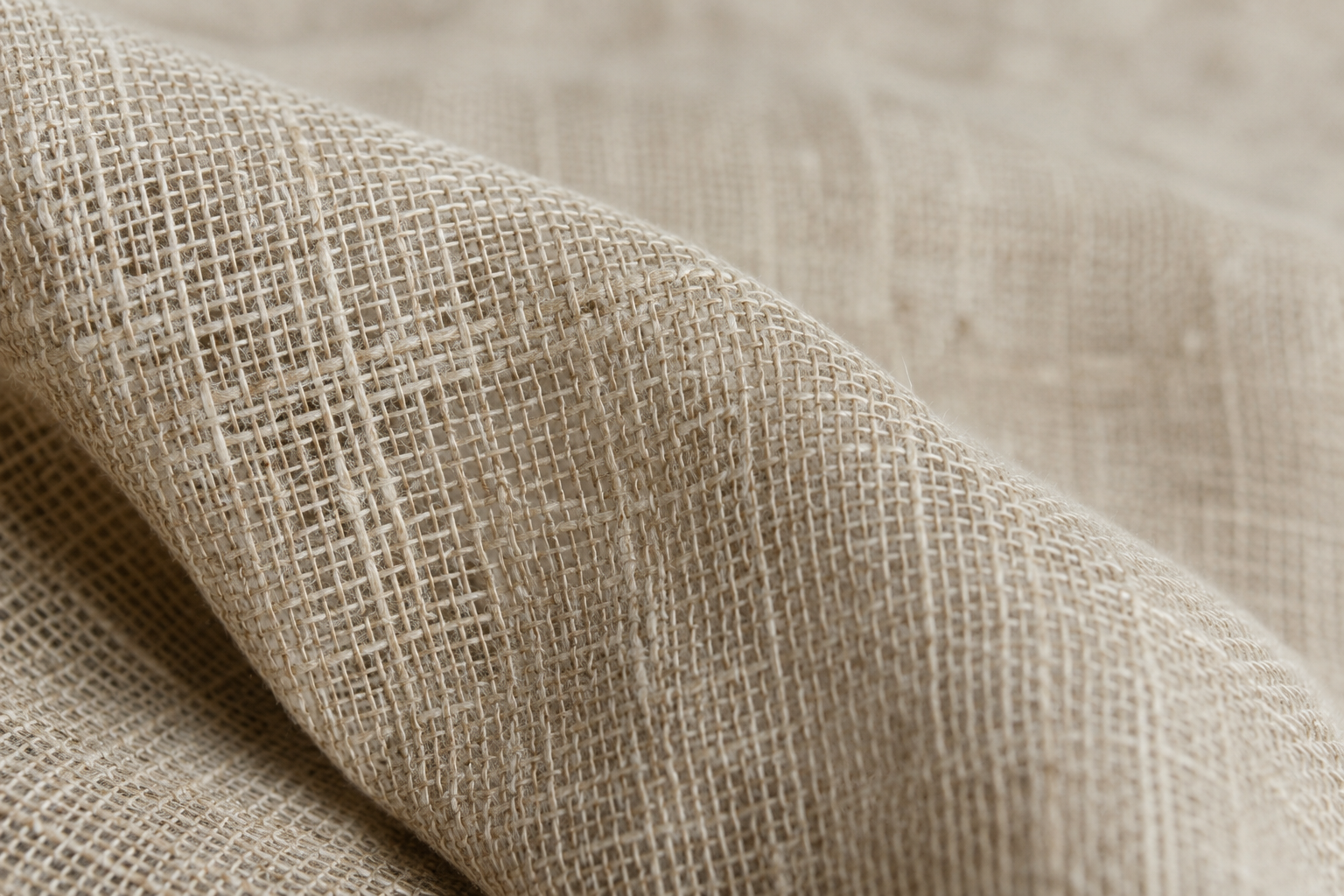
This is especially true for natural fibers like cotton, linen, silk, and wool. The very qualities that make these fabrics so lovely, such as their softness, breathability, and texture, also make them absorbent. Smoke and its toxins can work their way into the fibers themselves, which is why a lingering odor sometimes returns even after a thorough cleaning. That trapped residue is also why heavily affected drapes can be so difficult to fully restore.
Dry Cleaning vs. Replacement: Which Truly Removes Smoke and Toxins?
Both options exist, and I'll always be straight with you about what your drapes truly need. Dry cleaning can freshen lightly affected fabric. But when smoke and its toxins have settled deep into the fibers, or a restoration professional has classified your drapes as a total loss, replacing them with quality custom drapery is the choice I most often recommend for a lasting result. Here's how the two compare:
Odor and toxin removal
Dry cleaning reduces surface odor, but smoke and toxins absorbed deep in the fibers may linger or return over time.
Replacement gives you a completely fresh start, with nothing held in the weave.
A cleaner, fresher home
Cleaned fabric can still hold onto smoke residue, which is why the odor sometimes comes back weeks later.
New window treatments carry no smoke or residue at all, giving many homeowners real peace of mind and a fresher-feeling home.
Fabric condition
Heat, soot, and repeated cleaning cycles can weaken fibers and dull color.
New drapery gives you fibers at full strength and vibrancy from day one.
Cost, honestly
A single dry cleaning often costs around a third of the price of new drapery, so on paper it can look like the cheaper path.
But heavily smoke-damaged drapes rarely come clean in one pass. Two or three rounds plus deodorizing treatments can quickly approach the cost of new drapery, and even then the toxins and odor may not fully lift. When that happens, you've spent nearly the same amount with far less to show for it. For deep damage, replacement is usually the better value.
Peace of mind
With cleaning, there's often lingering uncertainty about whether the odor and toxins will come back.
With replacement, you have the confidence of a true fresh start. Budget-friendly fabric options mean a cleaner, fresher home is within reach for most homeowners.
Benefits of Replacing Severely Smoke-Damaged Drapes
When drapes have absorbed heavy smoke, replacement offers advantages that go beyond appearance:
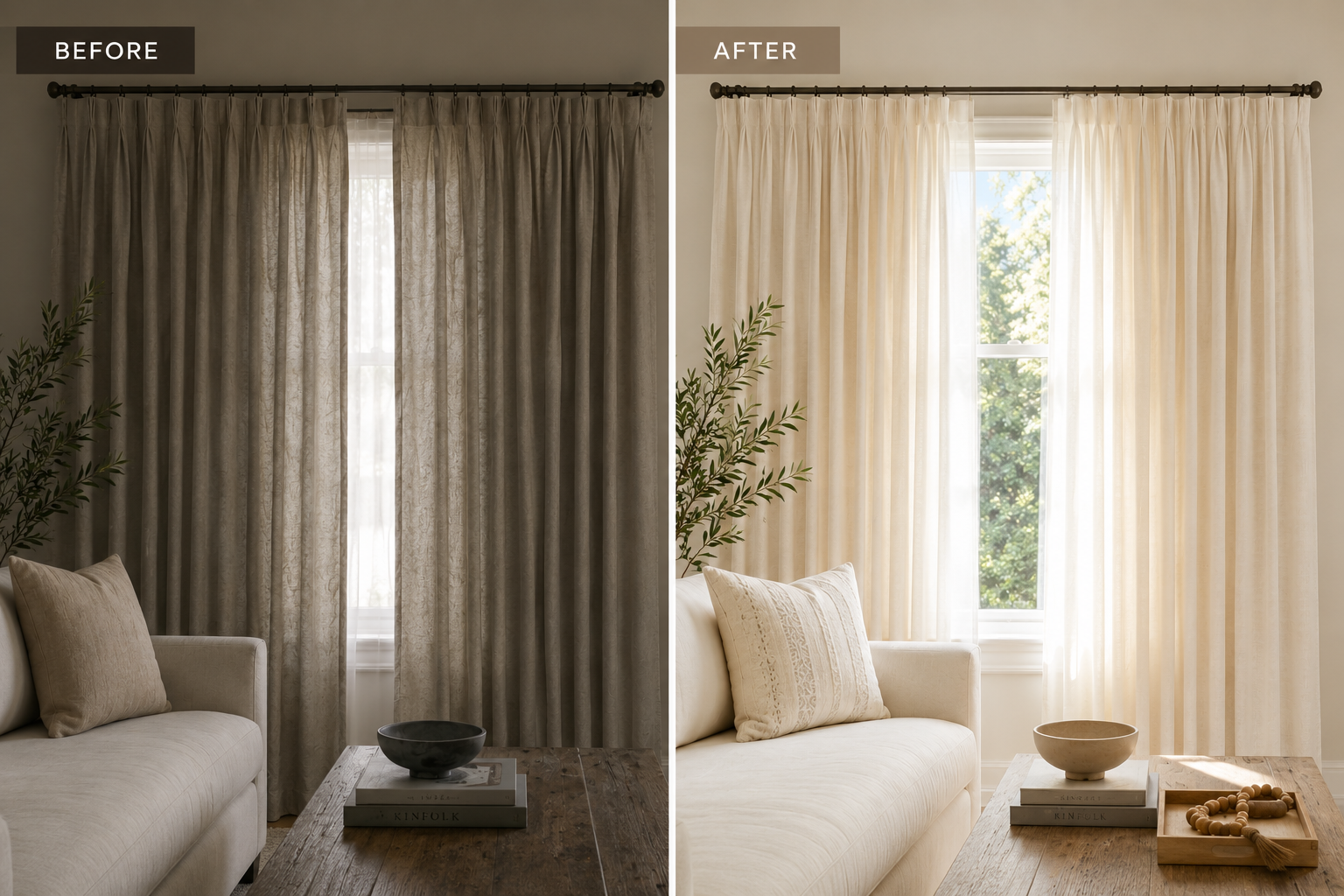
A genuinely fresh indoor environment. New drapes carry no absorbed residue, so you're not living with fabric that may keep releasing odor over time.
Stronger, longer-lasting fabric. Smoke exposure and aggressive cleaning cycles can leave fibers brittle, especially silk and linen. New drapery gives you full fabric life from day one.
A chance to upgrade thoughtfully. Many of my clients use replacement as an opportunity to choose fabrics better suited to their lifestyle, including natural, low-VOC, and easy-care options for those thinking about their indoor environment. Some even take the moment to explore other window treatment services, like plantation shutters or motorized shades, for rooms where fabric may not be the best fit going forward.
Better long-term value. One quality replacement often costs less over time than repeated cleaning and deodorizing attempts that may never fully resolve the problem.
Emotional closure. After a stressful event, there's real comfort in a fresh start, in fabric you chose for this next chapter of your home.
When Smoke and Toxins Only Touch the Surface
I want to be honest with you: not every situation calls for a full replacement right away. When smoke and its toxins have only touched the surface, rather than settling deep into the fibers, the damage may be more limited. That's often the case when:
Smoke exposure was brief or indirect (for example, smoke drifted in through open windows for a short time)
The fabric is synthetic or tightly woven, which holds less smoke and residue
There's no visible soot staining or discoloration
The odor is faint and doesn't return after airing out
Even so, smoke can hide deep in the weave where you can't see or smell it right away. That's why I always recommend having your drapes looked at in person before deciding. I'll give you my honest assessment of what your fabric really needs, whether that's a simple refresh or a fresh start with new drapery.
Why Palisades and Malibu Homes Face Unique Smoke and Toxin Challenges
Living close to the hills and coastline is one of the great joys of the Palisades and Malibu, and it also means our communities know wildfire more intimately than most. Malibu has one of the longest fire histories in the country, with major fires returning to these hillsides every few years across the decades. And in January 2025, the Palisades Fire became the most destructive fire in modern Los Angeles history, damaging or destroying thousands of homes across both communities and sending smoke and airborne toxins far beyond the burn areas into countless homes that never saw a flame.
That last point matters. Smoke and its toxins travel. Even homes miles from a fire can end up with drapes that quietly absorbed weeks of smoke, soot, and chemical residue from the air. Over the years, I've helped many local families evaluate their window treatments after events like these, and every home's situation is different. Fabric type, how close you were to the smoke and toxins, and even how your windows face the prevailing winds all play a role. That's why I always recommend an in-person look before making any decision. You can see examples of homes I've worked on in my portfolio, and a full list of the communities I serve on my service areas page.
Frequently Asked Questions
How do I know if my drapes are a total loss? If a restoration professional has assessed your home, they may classify heavily exposed textiles as total damage. Common signs include persistent odor after cleaning, visible soot staining, discoloration, or fabric that feels stiff or brittle.
Can smoke odor come back after dry cleaning? Yes, it can. When odor compounds have penetrated deep into natural fibers, surface cleaning may not reach them, and the smell can gradually return, especially in warm or humid conditions.
Which fabrics absorb smoke the most? Natural fibers such as cotton, linen, silk, and wool are the most absorbent. Synthetics and tightly woven fabrics tend to hold less residue.
Is replacing drapes more expensive than cleaning them? Not always in the long run. A single cleaning is cheaper upfront, but repeated cleanings and deodorizing treatments can approach or exceed the cost of quality new drapery, without a guaranteed result.
Will my homeowner's insurance cover replacement? Coverage varies by policy and situation, so I always encourage homeowners to speak directly with their insurance provider. I'm happy to provide documentation or estimates if that helps your conversation with them.
What should I look for in replacement drapes? Think about your budget, your home's style, how much light control you want, and any environmental preferences. During a consultation, I bring fabric samples so you can see and feel your options in your own light.
Let's Review Your Options Together
You don't have to figure this out alone. If you're weighing what to do with smoke-affected drapes, I'd be glad to take a look at your fabrics, your windows, and what makes sense for your home and budget. The consultation is free, and there's never any obligation. Sometimes my best advice is simply, "These can be cleaned, so save your money."
You deserve windows that feel like home again. I'd be honored to help you get there.
Ms. Grace, Window Treatment Specialist, 18 Years Serving Pacific Palisades, Malibu, Beverly Hills and Greater Los Angeles
