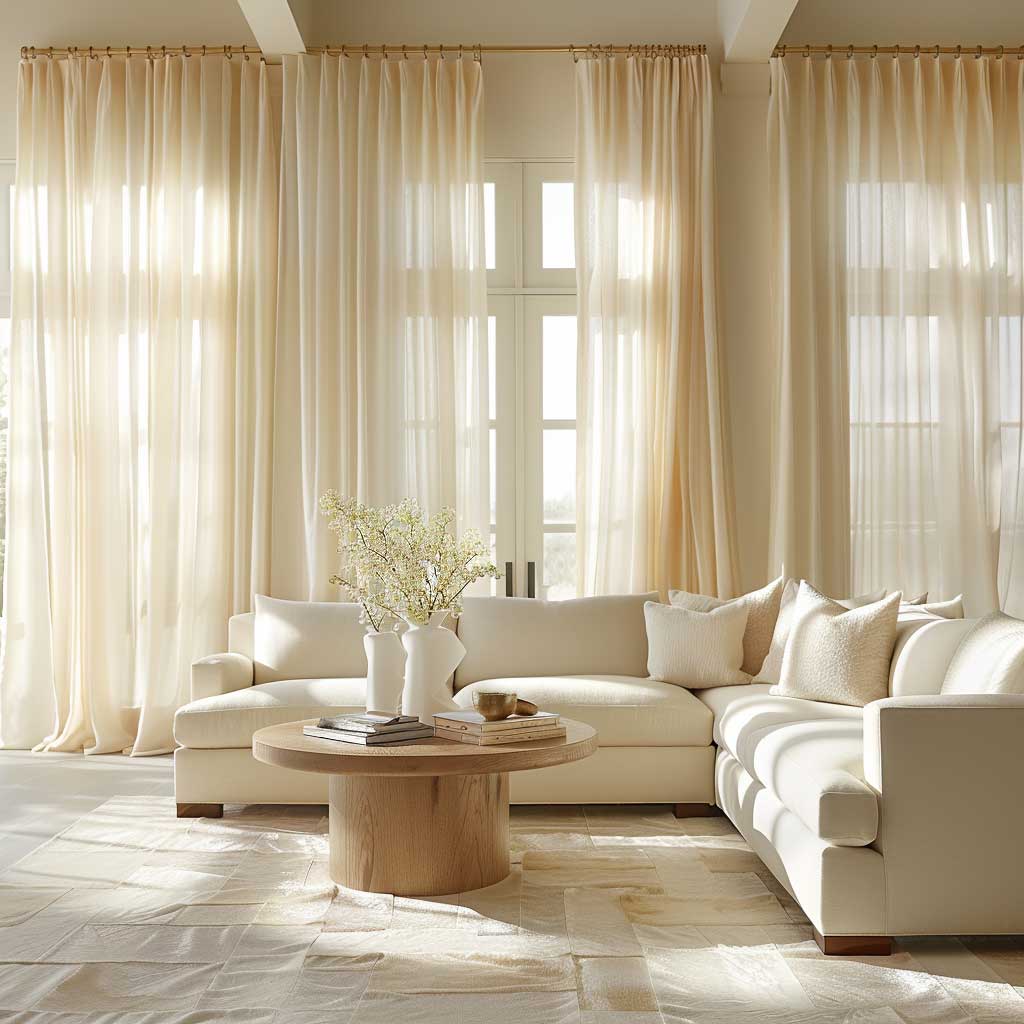
Why Your Room Feels Unfinished: Custom Window Treatments
You've painted the walls, chosen the furniture, hung the artwork, and layered in the perfect rug. And yet, when you stand back and look at the room... something is still missing.
If that sounds familiar, you're not alone. It's one of the most common frustrations homeowners bring to interior designers, and the answer is almost always the same. The missing piece isn't another pillow, plant, or piece of art.
It's your windows.
Bare or under-dressed windows are the single most overlooked element in home design. And the fix, thoughtfully chosen custom window treatments, is often what transforms a room from "almost there" to genuinely finished.
Common Signs Your Windows Are Making the Room Feel Unfinished
Not sure if your windows are the culprit? Here are the telltale signs designers look for:
The room feels stark or echoey. Hard surfaces like glass, drywall, and wood floors reflect sound and light. Without fabric at the windows, a room can feel cold no matter how much furniture you add.
Everything looks great in photos... except the windows. Bare glass or builder-grade blinds stand out as the one element that wasn't chosen intentionally.
The room feels smaller or the ceilings feel low. Windows without vertical drapery lines miss an easy opportunity to draw the eye upward.
Harsh glare or a "fishbowl" feeling at night. If you're squinting in the afternoon or feeling exposed after dark, your windows aren't working for you, functionally or visually.
Your color palette stops at the walls. When the windows don't participate in the room's colors and textures, the design feels incomplete around the edges.
You keep adding decor, but nothing helps. More accessories can't compensate for an unframed window, just as more furniture can't compensate for bare walls.
If two or more of these sound like your space, your windows are very likely the reason the room doesn't feel done.
Window Treatments: The Visual Frame of Every Room
Think of a beautiful painting without a frame. The art is still lovely, but it feels unfinished, unanchored, and a little exposed. Windows work exactly the same way.
Window treatments are the visual frame of a room. They soften hard architectural edges, add depth and dimension, and introduce texture, color, and movement that no other element can. When they're missing, even a professionally decorated room can read as incomplete.
When they're done well, they quietly tie everything together: the wall color, the upholstery, the rug, and the light itself.
The Benefits of Custom Window Treatments (Beyond Looks)
Custom window treatments aren't only about beauty. They solve everyday problems while elevating your home design:
A tailored, built-for-your-home fit. Custom treatments are measured and made for your exact windows. No awkward gaps, dragging hems, or too-short panels.
Precise light control. From gentle, filtered daylight to full blackout for bedrooms and media rooms, you choose exactly how light enters each space.
Privacy without sacrificing brightness. Layered options let you screen the view in while still enjoying natural light.
Softer acoustics and added comfort. Fabric at the windows absorbs sound and adds a layer of insulation, helping rooms feel calmer and more comfortable year-round.
A more polished, "designed" look. Custom drapery, designer shades, and shutters are what make a room feel intentional. It's the difference between decorated and finished.
Design that fits your style. Fabrics, colors, pleat styles, hardware, and mounting details are all chosen to suit your home, not a store shelf.
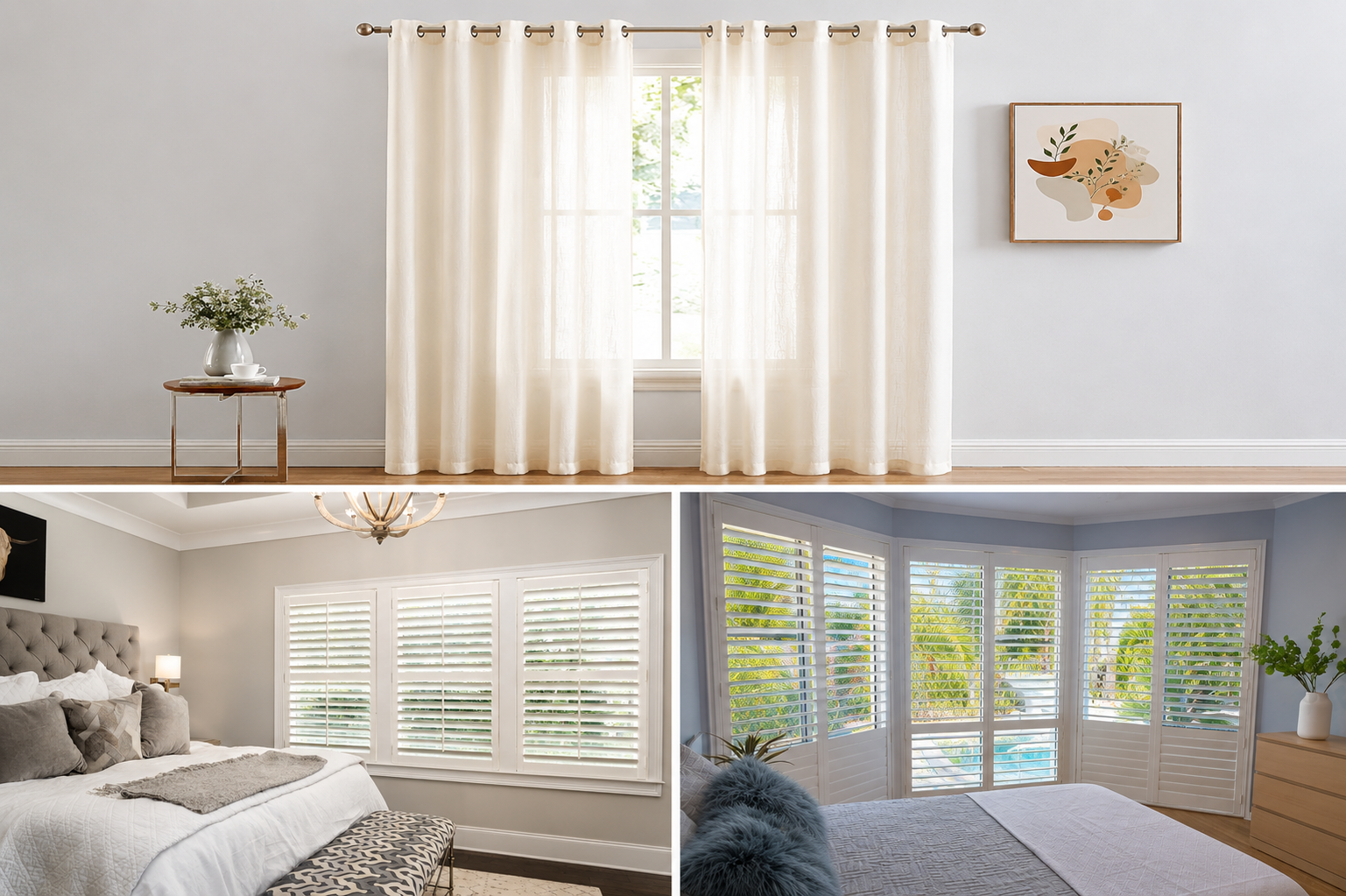
Types of Window Treatments to Consider
There's no single right answer for every room; that's the point of going custom. Here are the most popular options and where each one shines.
Custom Drapery
Floor-length drapery panels add height, softness, and drama. Mounted high and wide, custom drapery can make ceilings appear taller and windows appear larger. Choose relaxed linen for a casual, airy feel or structured pleats in a rich fabric for a more tailored, luxurious look.
Roman Shades and Designer Shades
A tailored Roman shade offers clean lines and a polished, structured appearance, ideal for kitchens, bathrooms, offices, and windows where drapery would be impractical. Designer shades are also a beautiful way to introduce pattern or texture in a controlled, sophisticated dose.
Plantation Shutters
Plantation shutters bring timeless, architectural character to a home. They offer excellent privacy and light control, are easy to maintain, and suit both traditional and modern interiors. Because they're fitted to the window itself, shutters feel like part of the home's architecture rather than an accessory.
Custom Blinds
Custom blinds are a versatile, practical choice when you want precise, adjustable light control with a clean, streamlined look. Made to measure, they fit your windows perfectly and work beautifully on their own or layered under drapery.
Motorized Shades
For hard-to-reach windows, large glass walls, or simply everyday convenience, motorized shades let you adjust light and privacy at the touch of a button. They're a favorite for bedrooms, media rooms, and modern homes where clean lines matter.
Sheers and Light-Filtering Panels
Sheer linen or voile panels diffuse sunlight into a soft, flattering glow while gently screening the view. They're perfect for living spaces where you want brightness and airiness with a touch of privacy.
Layered Treatments
Some of the most beautiful and most functional windows combine treatments: a Roman shade or woven wood shade for privacy and light control, layered with drapery panels for softness and color. Layering adds depth that instantly reads as designer-finished.
Designer Tips for Windows That Finish the Room
A few professional guidelines make an outsized difference:
Hang drapery high and wide. Mount rods several inches above the window frame (or near the ceiling) and extend them beyond the frame on each side. Windows look larger, ceilings look higher, and more glass stays exposed for light.
Let panels kiss the floor. Drapery should just touch the floor or break slightly, like well-tailored trousers. Too-short panels are the most common giveaway of an off-the-shelf solution.
Match the treatment to the room's job. Bedrooms often call for blackout or room-darkening linings; living areas usually want light-filtering softness; kitchens and baths benefit from moisture-friendly, easy-care options like shades, blinds, or shutters.
Repeat a color or texture from the room. Pulling a tone from your rug, pillows, or artwork into the window fabric is what makes a space feel cohesive rather than assembled.
Don't forget the hardware. Rods, rings, and finials are the jewelry of the window. Finishes that echo your lighting or cabinet hardware quietly unify the whole room.
Think in layers for flexibility. Privacy at night, glow during the day, softness always. Layered treatments adapt as the light changes.
The Emotional Side of a Well-Dressed Window
Windows do more than let in light. They connect your home to the world outside. When they're dressed intentionally, they change how a room feels, not just how it looks.
A bare window can make a space feel cold, exposed, or temporary. A beautifully framed one invites calm and comfort. It's the difference between a house that's decorated and a home that feels settled, warm, and complete.
The Fix: Thoughtful, Custom Window Design
Finishing a room isn't about hanging generic curtains and calling it a day. It's about intentional choices: the right fabric weight, the right level of light filtration, the right hardware, and a fit made precisely for your windows and your life.
That's what custom window treatments deliver: function and beauty, tailored to your home. You're not just covering glass. You're completing the story your room has been trying to tell.
Want to see what that looks like in real homes? Browse our portfolio for inspiration.
Ready to Take Your Room From "Almost There" to Beautifully Finished?
If your space still feels incomplete no matter what you add, let's look at your windows together. A design consultation is the easiest way to explore fabrics, styles, and options tailored to your home, and to finally give your rooms the polished, finished feeling they deserve.
We proudly provide custom window treatments in Los Angeles and the surrounding communities.
Schedule your window treatment consultation today. We'd love to help you love your home, from the windows in.
FAQs (Homeowner Search-Matched)
Why does my room feel unfinished even after decorating? In most cases, it's the windows. Bare or under-dressed windows leave a room without its visual frame, making the space feel stark or incomplete no matter how much furniture and decor you add. Window treatments add the softness, texture, and vertical lines that tie a room together.
Do window treatments really make a room look finished? Yes. Designers consider window treatments one of the final and most transformative layers of a room. Drapery, Roman shades, and shutters soften hard edges, frame the view, and connect the room's colors and textures into one cohesive design.
What's the difference between custom window treatments and store-bought curtains? Custom window treatments are measured and made for your exact windows, in fabrics and styles chosen for your space. That means a precise fit, correct lengths, better light control and privacy options, and a tailored look that off-the-shelf panels can't match.
What window treatments make a room look bigger or ceilings look taller? Floor-length drapery hung high and wide is the classic designer trick. Mounting the rod near the ceiling and extending it past the window frame draws the eye upward and makes both the window and the room feel larger.
Which window treatment is best for privacy and light control? It depends on the room. Plantation shutters, custom blinds, and lined Roman shades offer strong privacy and adjustable light control; blackout-lined drapery is ideal for bedrooms; sheers provide daytime privacy while keeping rooms bright. Layered treatments give you the most flexibility.
Are custom window treatments worth the investment? For most homeowners, yes. They're made to fit perfectly, built to last, and deliver benefits generic options can't: better privacy, precise light control, improved comfort, and a genuinely finished look that elevates the entire home.
How do I choose the right window treatments for my home? Start with how each room is used: sleep, work, gathering, cooking. Then consider light, privacy, and style needs. A professional consultation makes this easy. A designer can measure, recommend fabrics and styles, and handle the details for you.
