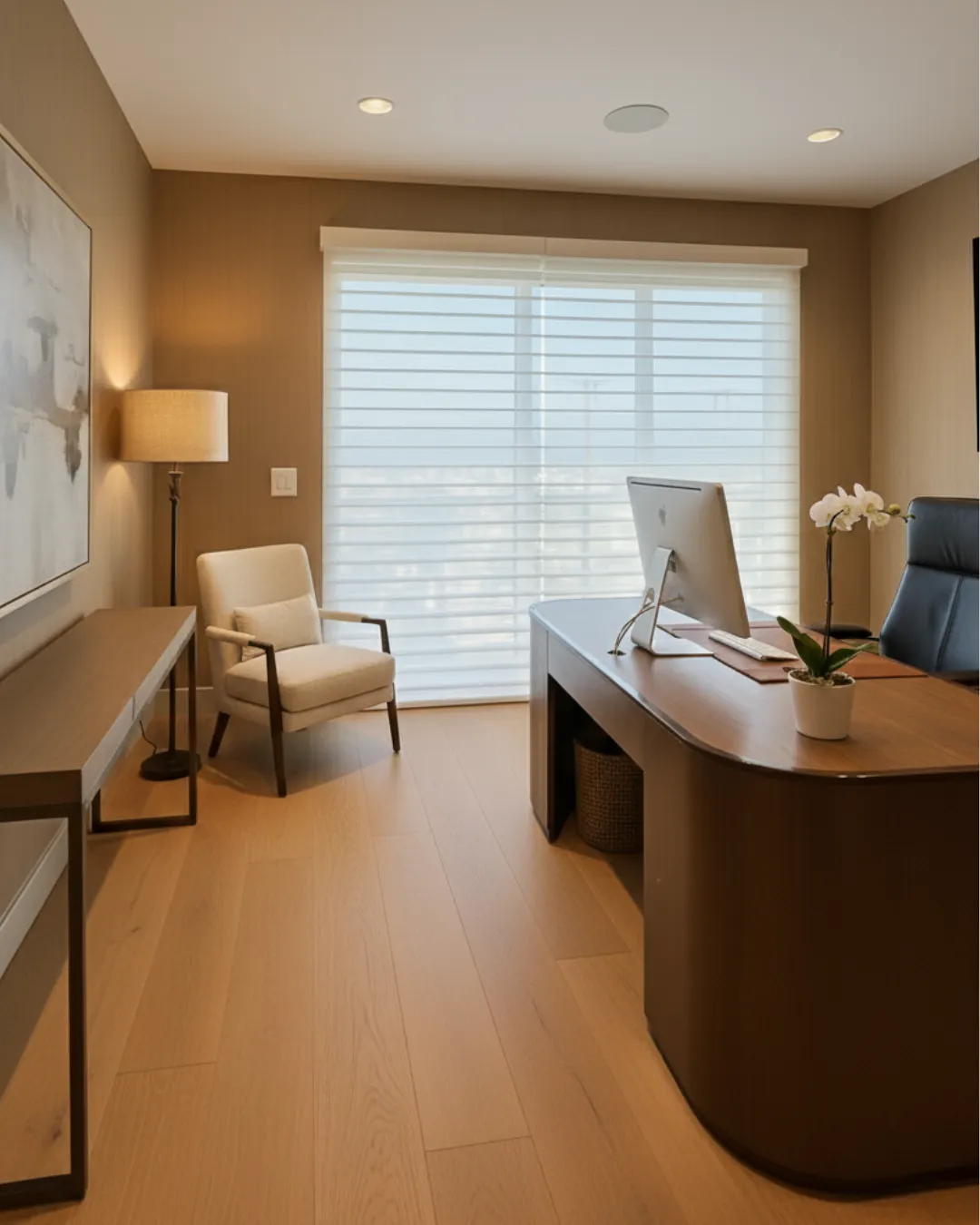
Light Temperature & Window Treatments: A Designer's Guide
Walk into a beautifully designed room and something simply feels right. You might credit the furniture, the color palette, or a perfectly styled shelf but more often than not, the real secret is the light. Specifically, the temperature of the light and the way it moves through the space.
Professional designers understand this instinctively. Before a single fabric swatch or paint chip enters the conversation, they study how light lives in a room. And when it comes to light temperature and window treatments, the two are inseparable: your shades, sheers, and drapery are the tools that shape how light enters your home in the first place.
Here's why light comes first and how the right custom window treatments help you get it beautifully right.
What Is Light Temperature, Exactly?
Light temperature describes the color tone of light, measured in Kelvins (K). At the warm end of the scale, light glows soft yellow or amber, like candlelight or a sunset. At the cool end, light appears crisp white or slightly blue, closer to midday sun or a bright workspace.
The emotional difference is dramatic. Picture the intimate warmth of a candle-lit dinner versus the clinical brightness of an operating room. Both are purposeful, but they create entirely different feelings. Your home works the same way: the temperature of the light in each room quietly sets the emotional tone before you notice anything else.
A Quick Reference for Homeowners
Warm light (2700K–3000K): Cozy, relaxing, and flattering. Ideal for living rooms, bedrooms, and dining spaces, anywhere you want people to linger and unwind. Warm lighting for living rooms remains a designer favorite for good reason.
Neutral light (3500K): A comfortable middle ground, often used in transitional spaces like hallways and entries.
Cool light (4000K–5000K): Energizing and clear. Best for kitchens, bathrooms, home offices, and task areas where visibility matters.
Why Designers Evaluate Light Before Anything Else
Even the most stunning room can feel subtly "off" when the lighting doesn't match the space's purpose. A bedroom washed in cool blue light never quite relaxes you. A kitchen lit entirely in warm amber can feel dim and hazy when you're trying to cook.
But here's what many homeowners miss: light temperature isn't just about your bulbs. Natural daylight changes character throughout the day cooler and bluer in the morning, warm and golden by late afternoon and it changes with your window's orientation, too. South-facing rooms bathe in strong, warm light for much of the day; north-facing rooms receive softer, cooler, more consistent light. Here in Southern California, where homes in Los Angeles and along the coast in Malibu enjoy abundant sunshine nearly year-round, managing that light well matters even more.
This is exactly where interior lighting design and window treatments intersect. Your window coverings are the instruments that filter, soften, diffuse, or block that ever-changing daylight. Choosing window treatments for natural light is really about deciding how you want light to behave in each room.
How Window Treatments Shape the Light in Your Home
When professionals design custom window treatments, they're considering far more than pattern and style. Four qualities determine how a treatment interacts with light:
Fabric Color
Fabric acts like a filter. Light passing through warm-toned fabrics, creams, ivories, and soft taupes takes on a golden cast that enhances a cozy atmosphere. Cooler fabrics like crisp whites and grays keep light bright and neutral. A designer will often hold fabric samples up to your actual windows at different times of day, because a fabric that looks perfect in a showroom can read entirely differently in your afternoon light.
Opacity
Opacity controls how much light enters. Sheer curtains allow daylight to flow in while softening glare and adding privacy. Designer light-filtering shades gently diffuse sunlight into an even, flattering glow, wonderful for living spaces. Room-darkening and blackout options give you full control in bedrooms and media rooms, and custom blinds offer precise, adjustable control anywhere in between. Most well-designed homes use a mix of materials to match each room's function.
Texture
Texture determines the quality of light. Natural weaves like linen and woven woods break light into soft, organic patterns. Smooth fabrics let it pass evenly. Textured treatments can turn harsh direct sun into something warm and atmospheric — a subtle effect that dramatically changes how a room feels. For a crisp, architectural way to sculpt light, plantation shutters let you angle sunlight exactly where you want it throughout the day.
Layers
Layered window treatments offer the most flexibility of all. A classic pairing sheer curtains beneath custom drapery panels, or light-filtering shades behind decorative side panels lets you adjust the light from morning to evening. Sheers alone diffuse midday sun; drawn drapery adds warmth and intimacy at night. Layers also add depth and polish that a single treatment rarely achieves.
And if adjusting multiple layers sounds like a chore, it doesn't have to be: motorized shades can shift automatically with the time of day, so your rooms always sit in their best light no effort required.
Light Before Layers: The Designer's Sequence
Before recommending a single rug, paint color, or fabric, seasoned designers stand back and observe how light behaves in your space across a full day. Where does the sun fall in the morning? Where does glare become a problem? Which corners go dark by 4 p.m.?
Only then do finishes and fabrics enter the picture because every color and texture you choose will be seen through that light. This sequence is how designers ensure your home works in real life, not just under showroom conditions. You can see how this approach comes together in real homes in our portfolio.
It's also how homeowners avoid expensive missteps. A paint color chosen without considering the room's light temperature can look muddy by evening. Drapery ordered in the wrong opacity may leave a bedroom too bright to sleep in — or a living room too dark to enjoy. A professional window treatment consultation helps you get these decisions right the first time, saving the cost and frustration of redoing them later.
Let's Set the Perfect Tone Together
Want a home that looks and feels just right, from first morning light to the last lamp switched off at night? Let's start with how the light lives in your space and design from there.
Schedule your window treatment consultation, and we'll find the shades, sheers, and layers that make every room feel like it was always meant to. I proudly serve homeowners throughout the greater Los Angeles area, from Beverly Hills and Pacific Palisades to Calabasas and Westlake Village.
