
Best Window Treatments That Age Well and Stay Stylish for Years
How to Pick Window Treatments That Age Well Over the Years
Picking window treatments that last starts with two principles: choose timeless over trendy, and invest in materials built to perform through daily use, shifting sunlight, and evolving interior styles. The right choices made today can stay beautiful and functional for a decade or longer, without requiring a full replacement every time you redecorate.
Most homeowners focus almost entirely on how a treatment looks in the showroom. That is a reasonable starting point, but it is only part of the picture. A roman shade in a bold geometric pattern might photograph well in 2024, but feel dated by 2027. Meanwhile, a well-constructed linen panel in a warm neutral will quietly hold its own through several rounds of furniture changes, paint refreshes, and family transitions. This article walks you through the decisions that separate short-lived style from lasting design.
Why Timeless Materials Outlast Trendy Fabrics
The fabric or material you choose is the single biggest factor in how your window treatments age, both visually and structurally. Natural fibers like linen, cotton, and silk blends have been used for centuries because they drape beautifully and develop a refined quality as they soften with time. Synthetic blends engineered for UV resistance and moisture control are equally strong contenders in rooms with intense sun exposure or humidity.
Here is a quick breakdown of how common materials hold up:
1. Linen Window Treatments
Expected Lifespan: 10–15+ years
Best For: Living rooms and bedrooms
Benefits: Timeless appearance, breathable fabric, elegant texture
Potential Drawback: Can wrinkle more easily than synthetic alternatives
2. Cotton Window Treatments
Expected Lifespan: 8–12 years
Best For: Casual interiors and layered window designs
Benefits: Soft, versatile, and available in many styles
Potential Drawback: May fade when exposed to prolonged direct sunlight
3. Silk Blend Drapes
Expected Lifespan: 10–15 years
Best For: Formal dining rooms, sitting rooms, and luxury interiors
Benefits: Rich texture and sophisticated appearance
Potential Drawback: Requires specialized cleaning and maintenance
4. Performance Fabric Shades
Expected Lifespan: 12–20 years
Best For: Sunny rooms, humid climates, and high-traffic areas
Benefits: Excellent durability, fade resistance, and easy maintenance
Potential Drawback: May not provide the same natural texture as linen or cotton
5. Basswood Shutters
Expected Lifespan: 20+ years
Best For: Nearly any room in the home
Benefits: Exceptional longevity, classic style, and strong resale appeal
Potential Drawback: Higher upfront investment compared to fabric treatments
6. Aluminum Blinds with a Baked Finish
Expected Lifespan: 15+ years
Best For: Kitchens, home offices, and utility spaces
Benefits: Moisture-resistant, durable, and low maintenance
Potential Drawback: Less warmth and softness than fabric-based window treatments
If you are working with a sun-drenched coastal home, performance fabrics are not a downgrade. They are a practical choice that prevents the fading and warping that destroys cheaper alternatives within a few years. Homeowners investing inwindow treatments pacific palisadesoften deal with significant UV exposure and salt air, which makes material selection even more critical.
How to Pick Window Treatments That Age Well Over the Years by Getting the Fit Right
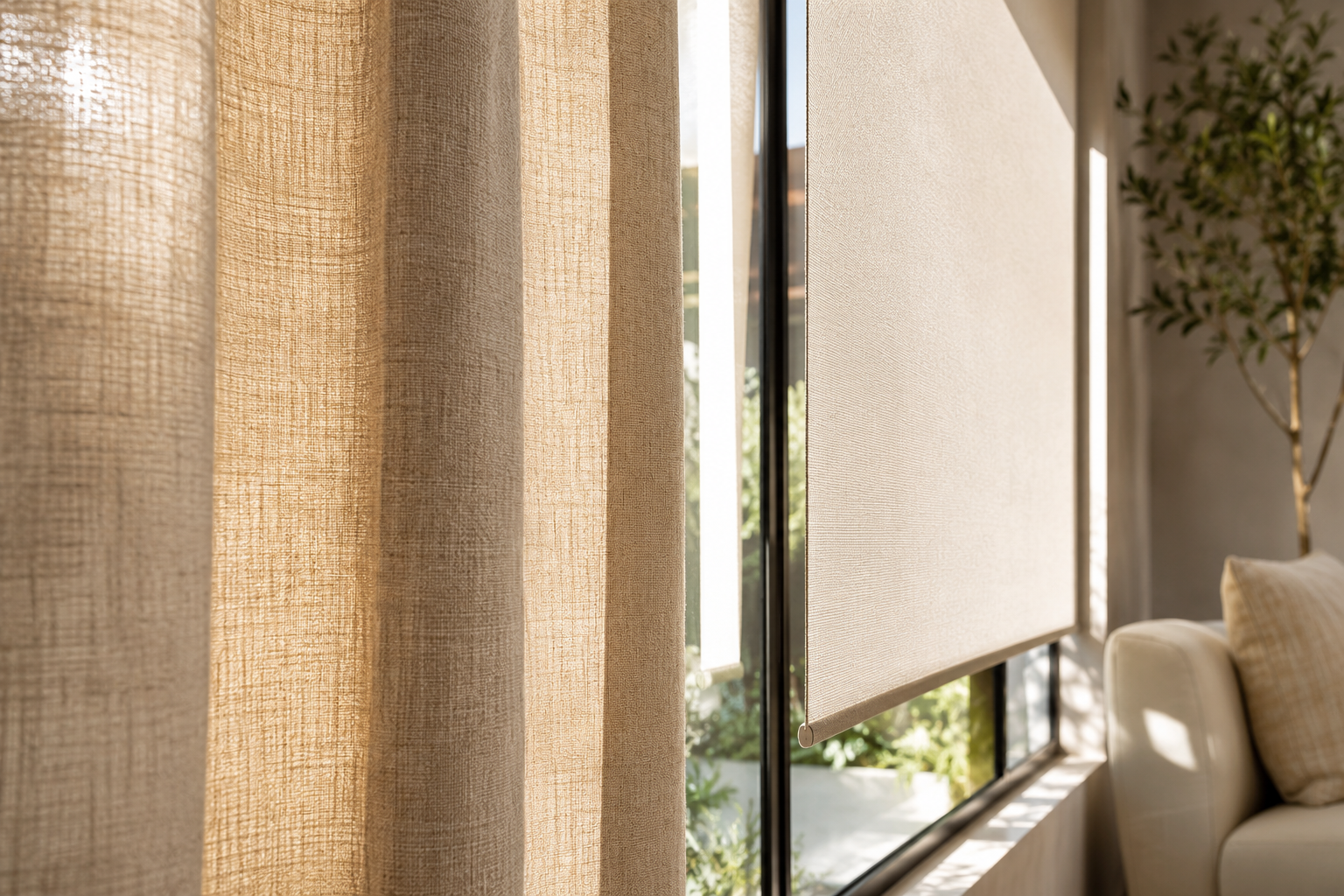
One of the most overlooked factors in long-term satisfaction is fit. Off-the-shelf treatments are sized for average windows, not your windows. Even a one-inch discrepancy can create sagging hems, visible gaps at the frame, or panels that stack awkwardly when opened. These issues become more pronounced over time as fabrics relax and hardware settles.
Custom window treatments eliminate these problems from the start. A properly fitted panel hangs cleaner, strains hardware less, and can often be refreshed with updated fabric or new hardware rather than replaced entirely. This means the investment compounds over time rather than depreciating quickly.
Key measurements to get right:
Width:Measure at the top, middle, and bottom of the window frame. Use the narrowest measurement for inside mounts.
Length:Floor-length panels should clear the floor by half an inch or pool slightly for a deliberate look. Neither is wrong, but inconsistency is.
Stack clearance:Ensure enough wall space beside the window so panels do not block natural light when open.
Mounting depth:Inside mount treatments need adequate depth to avoid protruding past the frame.
Homeowners in established neighborhoods with older window frames, like those exploringwindow treatments brentwoodorwindow treatments beverly hills, frequently discover that their windows are not perfectly square or uniformly sized, which makes professional measuring especially worthwhile.
Neutral Palettes and Classic Styles That Stay Relevant
Color is where most homeowners make their biggest regret. A bold emerald velvet curtain or a high-contrast black roman shade might feel exciting for a year. After that, it fights with every furniture update, art piece, and seasonal accent you try to introduce. Neutral palettes, on the other hand, function as a canvas rather than a focal point.
Colors that consistently age well:
Warm whites and off-whites (linen, cream, ivory)
Soft grays and greige tones
Natural wood and woven textures (bamboo, rattan weaves)
Dusty blues and muted sage (used sparingly and in natural fibers)
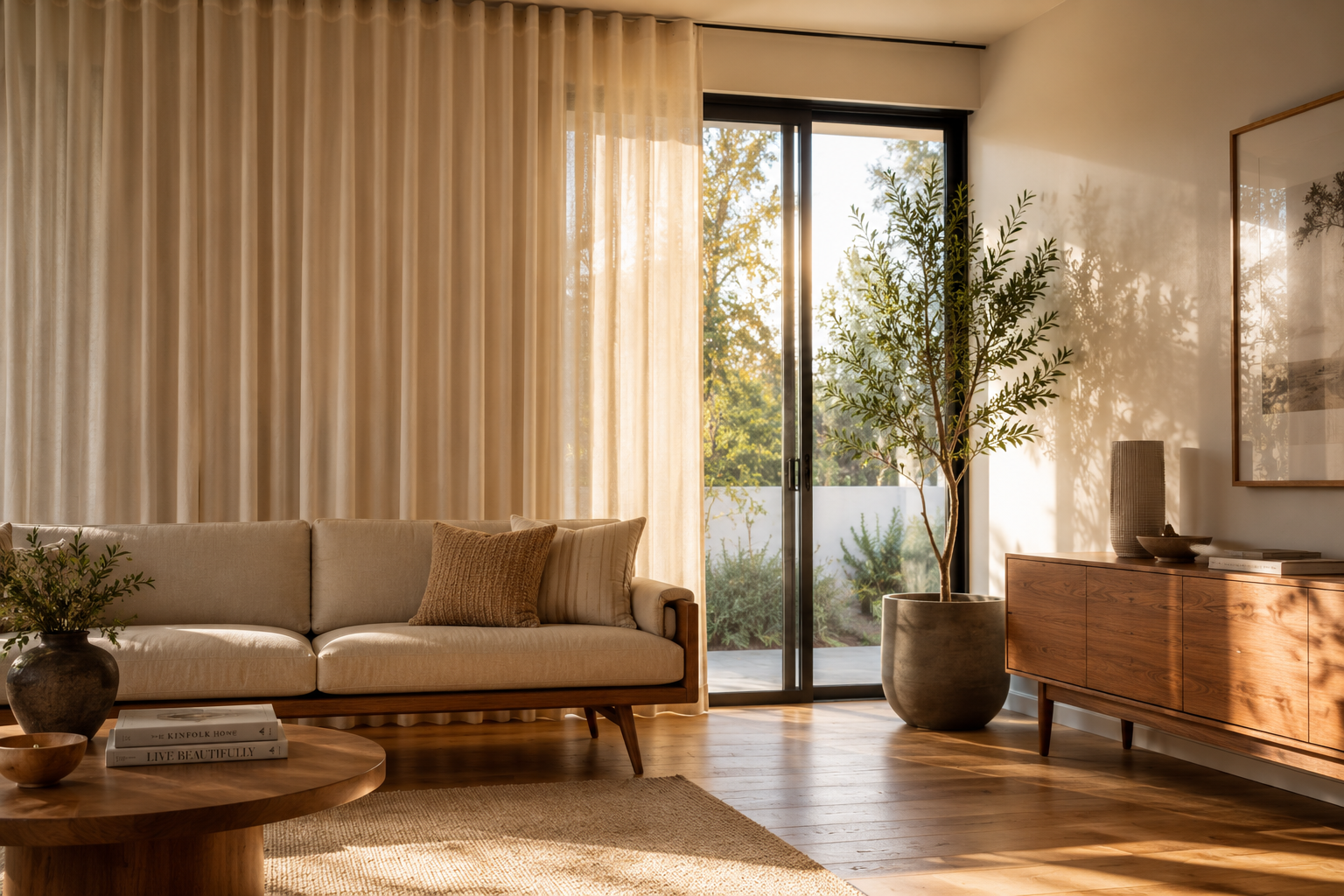
Beyond color, style restraint matters. Clean-lined roman shades, classic ripple-fold drapes, and plantation shutters have all maintained design relevance for decades. They work with traditional, transitional, and contemporary interiors without demanding the room be redesigned around them.
Clients working throughwindow treatments sherman oaksandwindow treatments encinooften have homes that blend mid-century bones with modern updates. Neutral, classic treatments bridge that gap without visual conflict.
Functional Features That Keep Treatments Relevant as Life Changes
Beautiful treatments that are difficult to operate, impossible to clean, or incompatible with smart home systems will frustrate you long before they wear out physically. Thinking about function early prevents costly upgrades later.
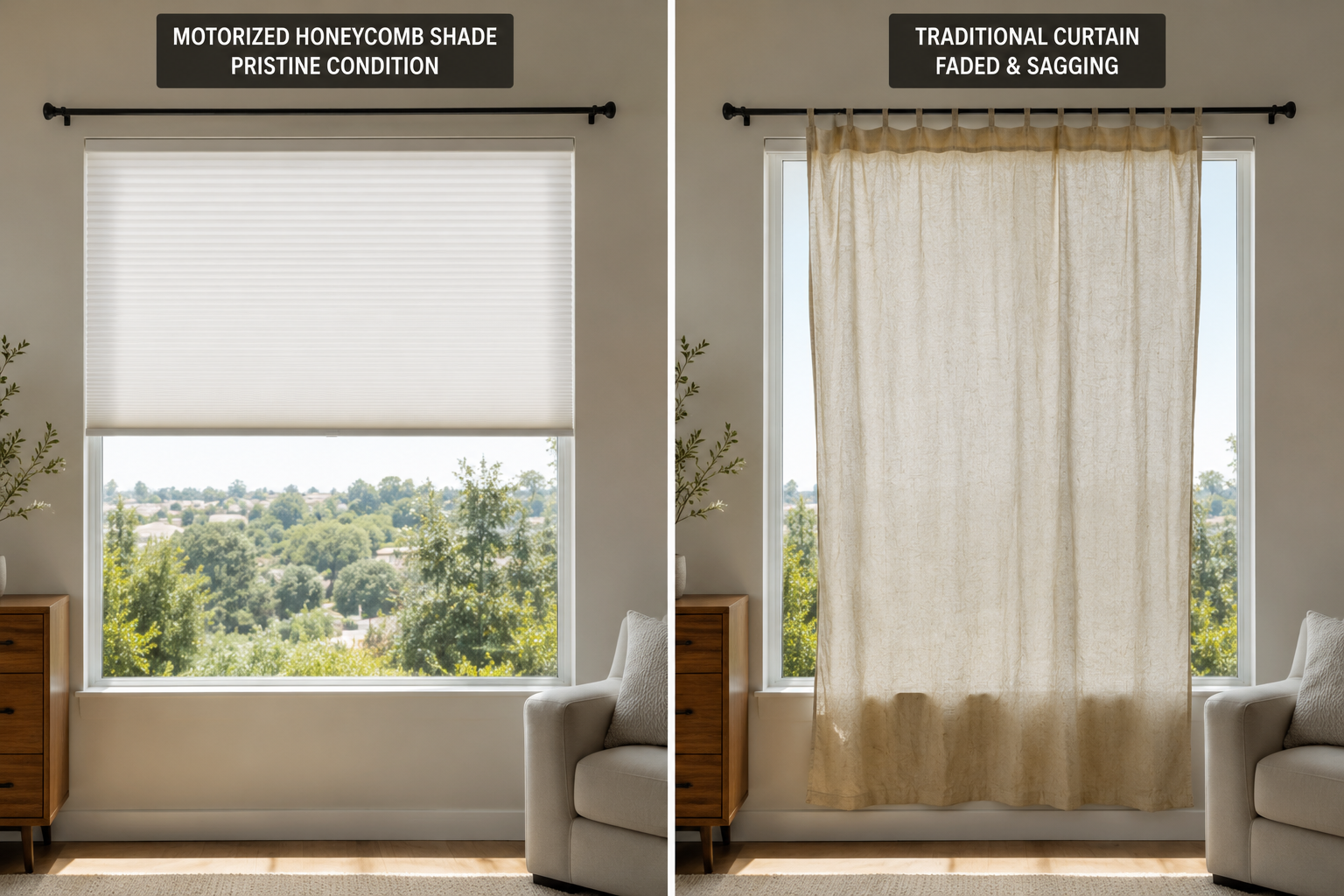
Motorizationis the most significant functional investment you can make for longevity. Motorized shades and drapes are easier to operate daily, reduce fabric wear from repeated manual handling, and can integrate with existing or future smart home systems. They also eliminate cords entirely, which is a safety requirement in homes with children and pets.
Ease of cleaningis equally important. Roman shades with removable fabric panels, shutters that wipe clean, or performance fabrics that spot-clean without professional treatment will maintain their appearance far longer than delicate materials requiring dry cleaning after every incident.
Hardware durabilityis the quiet variable most people ignore. A beautiful panel hanging on flimsy brackets or a low-grade traverse rod will sag, strip, and fail within a few years. Invest in quality hardware with a weight rating appropriate for your treatment and you will rarely think about it again.
Homeowners in areas likewindow treatments camarillo,window treatments westlake village, andwindow treatments calabasasoften have larger homes with expansive windows, where the weight and span of treatments put extra demand on hardware and motorization systems.
Planning for Rooms That Will Change Purpose Over Time
A room does not always stay what it is when you first design it. A home office might become a nursery. A guest room might become a teenager's space. A formal dining room might transition into a multipurpose area as your family's needs shift.
Choosing window treatments that are neutral and versatile gives you the freedom to evolve the room without replacing everything. A set of warm white linen panels will work in a nursery, a reading room, and a home office without modification. A pair of bold patterned panels locks you into a specific mood that may not survive the next interior phase.
This is also worth considering in vacation communities or second homes. Residents seekingwindow treatments malibuorwindow treatments agoura hillsoften renovate in phases or rent their properties seasonally, making versatile, durable treatments a practical and financial priority.
Things to Know
UV damage is cumulative. Even treatments marketed as fade-resistant will eventually show wear if they face direct sun for several hours daily. Use a solar shade as a base layer to protect decorative drapes.
Hardware matters as much as fabric. A high-quality panel on cheap hardware will fail faster than a mid-range fabric on quality rods and brackets.
Lining your drapes extends their life significantly. Blackout or thermal linings reduce direct UV contact with the face fabric and improve insulating performance.
Motorization is easier to add at installation than to retrofit later. If you are considering it, do it upfront.
Custom treatments can often be re-covered. If you love the structure and hardware of your existing custom roman shades, ask whether new fabric can be applied rather than replacing the entire unit.
Cleaning frequency protects longevity. Dust and debris act as abrasives over time, especially in fabric folds. Vacuuming with a brush attachment twice a year extends the life of most fabric treatments noticeably.
Frequently Asked Questions
Q: What window treatment style stays in style the longest?
Plantation shutters, ripple-fold drapes in neutral linen, and classic roman shades consistently remain relevant across design eras.
These styles have maintained popularity across traditional, transitional, and contemporary interiors for decades. Their clean lines and neutral adaptability make them unlikely to feel dated the way bold patterns or heavily ornate styles can within a few years.
Q: How often should window treatments typically be replaced?
Quality custom window treatments should last between 10 and 20 years with proper care, while off-the-shelf options often need replacement within 3 to 7 years.
The gap comes down to material quality, fit, and maintenance. Treatments that are professionally measured, made with durable materials, and cleaned regularly will significantly outlast budget alternatives.
Q: Is it worth spending more on custom window treatments?
Yes, because custom treatments are built to fit your specific windows, use higher-grade materials, and can often be refreshed rather than fully replaced.
A custom treatment that costs twice as much as a retail option but lasts three times as long is the better financial decision. The per-year cost is lower, and the visual result is consistently better.
Q: What fabrics are best for rooms with a lot of direct sunlight?
Performance fabrics with built-in UV resistance, or natural fabrics with a blackout or solar lining, hold up best in high-sun rooms.
Unlined linen or cotton in a south-facing room can begin showing visible fading within two to three years. A simple lining dramatically extends the life of the face fabric while also improving light control.
Q: Can I add motorization to existing window treatments?
In many cases, yes, though it is easier and more reliable to plan for motorization at the time of installation.
Retrofitting motorization depends on the treatment type, mounting situation, and whether the existing hardware can accommodate a motor kit. Discussing this possibility with your installer before you purchase saves time and money later.
The Bottom Line on How to Pick Window Treatments That Age Well Over the Years
The decisions that separate treatments you will love for fifteen years from ones you will want to replace in four come down to material quality, fit precision, neutral color choices, and forward-thinking functionality. None of these require you to compromise on beauty. They simply require you to think one step further than the immediate visual impression.
If you are ready to make choices that serve your home for the long haul, working with a specialist who understands your local environment, your window dimensions, and your design direction is the most efficient path forward. Reach out today to schedule a consultation and find treatments that will feel just as right ten years from now as they do the day they are installed.
