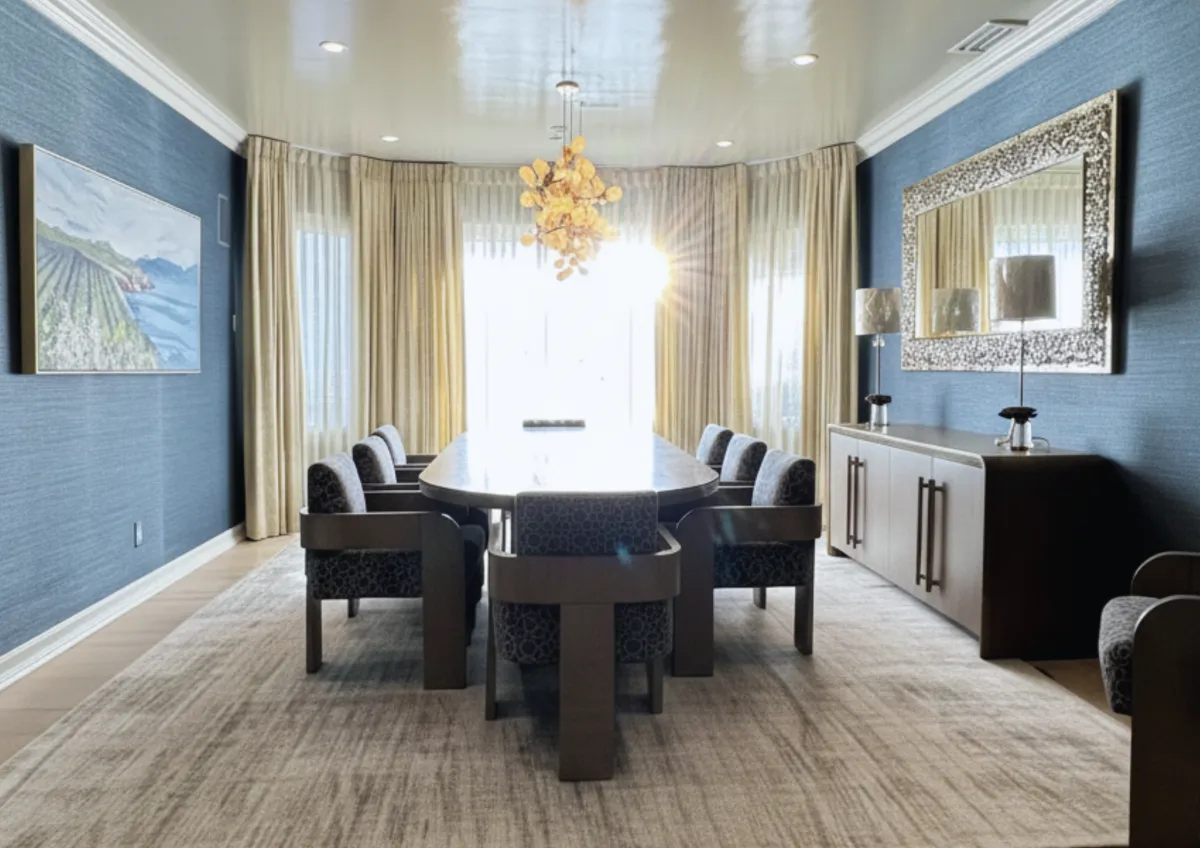
Dining Room Window Treatments: Warmth Through Texture
Ask most homeowners how to make a dining room feel warm, and the answers sound alike: terracotta walls, golden beige upholstery, earthy reds on the table linens. Those palettes can be beautiful, but they aren't a requirement. Some of the most inviting dining rooms we've designed are gray, white, or deep navy, and they feel warmer than rooms drenched in beige.
The reason is texture. The materials you can almost feel with your eyes slubbed linen drapery, woven wood shades, matte ceramics, a hand-finished wood table, do more to create warmth than any paint color. And nowhere is that easier to achieve than at your windows, where custom dining room window treatments offer the largest uninterrupted surface for layering softness into the room.
Why Texture Outperforms Color for Warmth
Visual warmth is only partly about hue. It's really about how a space makes you feel, and texture speaks directly to that instinct. A room built entirely from smooth, hard surfaces glass, lacquer, polished stone reads as cool no matter how warm its color palette. A room rich in tactile variation feels welcoming even in the coolest tones.
Consider a dining room in soft gray: sheer drapery panels filtering afternoon light, a rustic oak table with visible grain, and Roman shades in a natural fiber layered behind the sheers. Nothing in that palette is conventionally "warm," yet the room feels comfortable and lived-in. Texture adds the depth, softness, and dimension that color alone can't supply.
This matters most in dining rooms, where the goal is lingering. Guests stay longer in spaces that feel enveloping, and texture is what creates that enveloping quality.
Layered Window Treatments: The Fastest Route to a Warmer Room
Windows are frequently the most underused surface in a dining room. Bare windows or a single flat blind leave the room's largest planes hard and reflective. Layered window treatments change that immediately.
Start with a Textural Base Layer
A woven wood shade in bamboo, jute, or reed grasscloth introduces organic irregularity that reads as handcrafted. Explore designer shades in natural woven materials to see how these textures filter daylight into a soft, dappled glow during the day and add meaningful privacy in the evening useful in a room where you're often seated near the glass. If you prefer cleaner architectural lines, custom blinds in warm wood finishes can achieve a similar grounded effect with a more tailored profile.
Add Custom Drapery for Softness and Movement
Over the shade, a linen drapery panel in a ripple fold or soft pleat brings vertical softness and graceful movement. Custom drapery earns its place here in ways ready-made panels rarely can: the fabric weight is chosen for how it drapes and diffuses light, the length is tailored to kiss or puddle precisely, and the fullness is calculated so the folds hold their shape whether the panels are open or drawn.
The Practical Payoff
This pairing isn't just decorative. Layered treatments give you independent control of light and privacy shade lowered for glare during a bright lunch, drapery drawn for intimacy at dinner while insulating against drafts near the table. For dining rooms with tall or hard-to-reach windows, motorized shades make those daily adjustments effortless. Warmth, in this case, is both a feeling and a measurable comfort.
Choose Materials That Reflect Light Softly
The key to warmth in a cool palette is selecting materials that catch light gently rather than bouncing it back. Look for:
Slubbed or textured weaves in linen and linen blends, whose subtle irregularities scatter light and prevent flatness
Matte and brushed hardware a brushed brass or bronze drapery rod adds quiet richness where shiny chrome would read cold
Natural fibers like bamboo, rattan, and jute, which ground a modern room and keep minimalist schemes from feeling sterile
Even in a pared-back, contemporary dining room, these details balance structured elements stone, glass, metal—with the softness the space needs. A skilled designer weighs how each fabric behaves at your specific windows: how it handles the strong western sun typical of homes throughout Los Angeles and the surrounding communities, how opaque it becomes at night, and how its texture reads from across the room versus up close.
A Cool Palette, Fully Warmed: One Example
Picture a dining room with crisp white walls and a navy accent wall. On its own, the scheme could feel formal to the point of chilly. Now layer in the texture: woven wood shades at each window, ivory linen drapery on a bronze rod, a wool flatweave rug beneath the table, and chairs upholstered in a nubby bouclé. The palette hasn't changed—but the room has. It now invites people to sit down and stay.
That transformation came almost entirely from material choices, and the windows carried the largest share of the work. You can see how these layered combinations come together in real homes in our portfolio of custom window treatment projects.
Warmth Is a Feeling, Not a Paint Chip
You don't need to repaint, and you don't need to abandon a palette you love. By layering textures beginning with thoughtfully specified window treatments you can make a white, gray, or navy dining room feel every bit as welcoming as one wrapped in warm neutrals. The difference lies in the details: the right fabric weight, the right shade material, the right hardware finish, all chosen for your light, your windows, and the way you actually use the room. Our full range of window treatment design services covers each of those decisions, from initial measurements to final installation.
Let's Design a Dining Room That Feels as Good as It Looks
If your dining room looks finished but doesn't yet feel warm, the windows are the place to start. Schedule a custom window treatment consultation, and we'll walk you through fabrics, woven wood shades, and layered designs selected specifically for your space so every dinner feels a little more inviting. Reach out today to begin the conversation.
