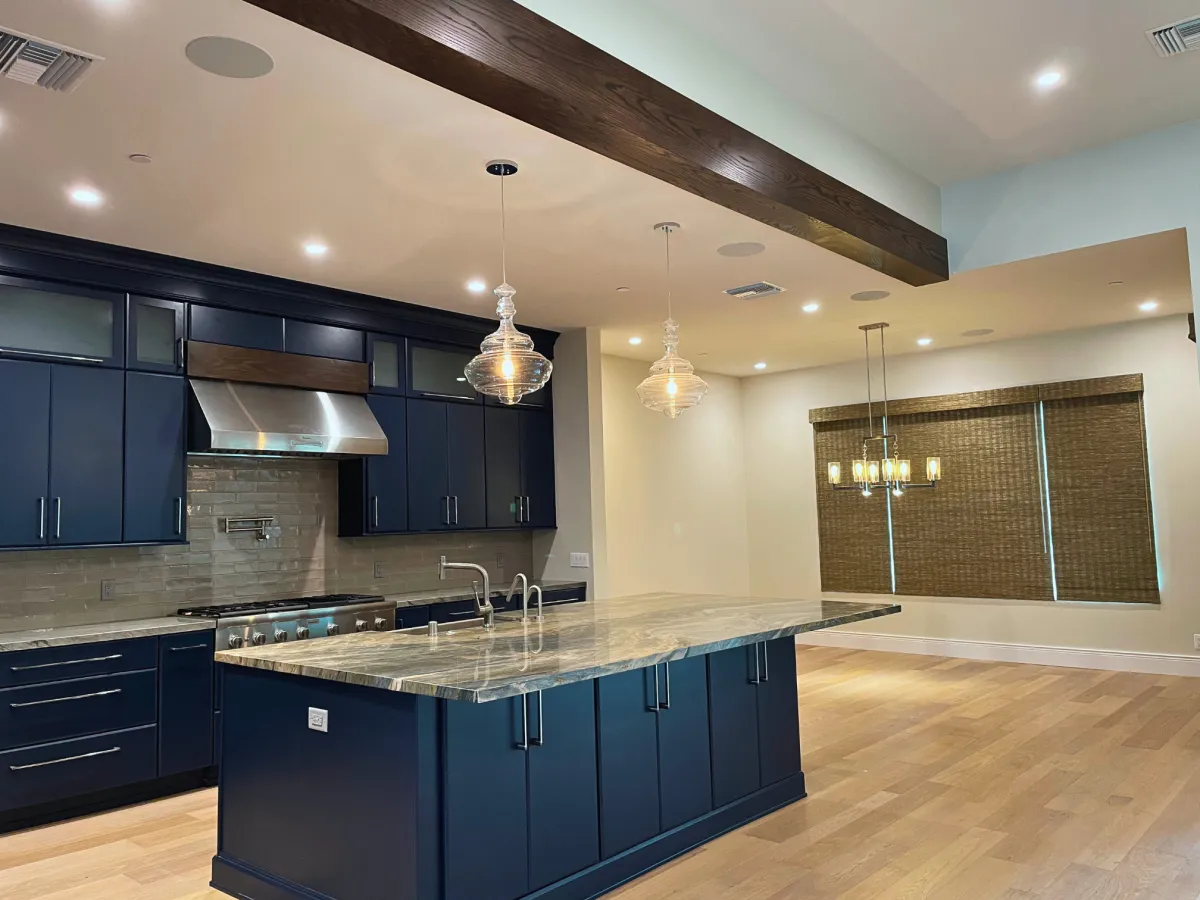
Kitchen Window Treatments: Blinds, Shades or Shutters?
The kitchen asks more of a window treatment than any other room in the house. Steam from the stovetop, splashes from the sink, grease in the air, big temperature swings, and constant hand traffic all take a toll, and the window over the sink is often the focal point of the whole room. The right kitchen window treatments have to do it all: manage glare during morning coffee, protect privacy after dark, stand up to humidity, and wipe clean without fuss.
The good news is that several treatment styles handle those demands beautifully. Below, we compare four of the most popular options, including where each one shines, where it falls short, and how to keep it looking new.
What Makes Kitchen Windows Different
Before comparing products, it helps to know what you are solving for. In most kitchens, a window treatment needs to handle:
Moisture and heat. Cooking and dishwashing raise humidity, which can warp, crack, or discolor natural wood and delicate fabrics over time.
Splatter and grease. Anything near the range or sink should have a wipeable surface or removable, washable construction.
Frequent adjustment. Kitchen light changes throughout the day, so you will open and close these treatments more than almost any others in the home.
Reach and clearance. Treatments above a sink are often hard to reach, and anything near a cooktop needs safe clearance from burners. Cordless or motorized lift options solve both problems at once.
Style continuity. The kitchen usually opens onto living and dining areas, so the treatment should complement sightlines into adjacent rooms.
Keep these five factors in mind as you weigh the options below.
Option 1: Faux Wood Blinds That Are Durable, Wipeable, and Budget-Friendly
Custom faux wood blinds are made from PVC, vinyl, or composite materials that mimic the look of painted or stained wood without wood's vulnerability to moisture. That makes them one of the most practical choices for kitchens.
Benefits
Moisture and heat resistance. Unlike real wood, faux wood will not warp, crack, or peel in a humid kitchen.
Easy cleaning. Slats wipe down with a damp cloth and mild soap, no special products required, even for light grease film.
Precise light control. Tilting slats let you cut glare on countertops without losing the view or blocking daylight entirely.
Value. Faux wood typically costs less than real wood blinds or shutters, making it a smart pick for kitchens with multiple windows.
Drawbacks
Slats are heavier than real wood, so very wide windows may lift less smoothly.
Blinds have more crevices than shades or shutters, so dusting is a more frequent chore.
Best for: Windows over the sink, busy family kitchens, and budget-conscious remodels where durability matters most.
Maintenance tip: Close the slats flat and dust weekly with a microfiber cloth; deep-clean with warm, soapy water every few months to prevent grease buildup.
Option 2: Plantation Shutters as a Built-In, Timeless Investment
Plantation shutters mount inside or around the window frame and operate with wide, tiltable louvers. Composite, vinyl, or specially treated wood shutters are all strong kitchen candidates; for high-humidity kitchens, composite or vinyl is the safer bet.
Benefits
Architectural, permanent look. Shutters read as part of the home, not an accessory, and can add lasting value and buyer appeal.
Outstanding durability. Quality composite shutters shrug off humidity, splashes, and daily handling for decades.
Simple cleaning. Wide louvers are faster to wipe down than narrow blind slats.
Inherently cord-free. Louvers tilt by hand or hidden tilt rod, a safer choice in homes with children or pets.
Drawbacks
Higher upfront cost than blinds or most shades, especially for custom sizes.
Frame depth requirements. Shallow window frames or cranked casement windows may need special mounting solutions.
Fixed footprint. Unlike shades, shutters cannot fully disappear from the window when open.
Best for: Homeowners planning to stay long-term, traditional and farmhouse kitchens, and anyone prioritizing a built-in, high-end look.
Maintenance tip: Dust louvers with a dry microfiber cloth weekly; spot-clean splatter promptly so it does not bake on in a sunny window.
Option 3: Roman Shades for Softness and Tailored Style
Roman shades bring fabric warmth into a room that is otherwise dominated by hard surfaces such as cabinetry, tile, stone, and stainless steel. They stack into neat horizontal folds when raised, giving a clean, tailored profile that works in traditional and modern kitchens alike.
Benefits
Design flexibility. Hundreds of fabrics, patterns, and fold styles let you tie the window into your backsplash, island seating, or adjoining dining space. Pairing a Roman shade with custom drapery in a connected dining area creates a cohesive, layered look.
Custom light control. Choose light-filtering fabric for a soft glow or add a blackout or privacy liner where the window faces neighbors.
Space-efficient. Roman shades mount close to the glass and raise fully, preserving the view and maximizing a small window.
Drawbacks
Fabric absorbs odors and grease more readily than hard-surface treatments, so placement matters. Keep Roman shades away from the immediate range area, and choose performance or stain-resistant fabrics near prep zones.
Cleaning is more involved. Most Roman shades need vacuuming with a brush attachment and occasional professional cleaning rather than a quick wipe-down.
Best for: Breakfast nooks, dining-side windows, and kitchens where softening the look is a priority, especially windows away from the sink and cooktop.
Maintenance tip: Vacuum monthly with a soft brush attachment and address stains promptly per the fabric manufacturer's care instructions.
Option 4: Sheer Shades for Daylight with Adjustable Privacy
Sheer shades combine fabric vanes suspended between two layers of sheer material. Tilt the vanes open and the room fills with soft, diffused daylight; close them and you gain privacy while still admitting a gentle glow.
Benefits
Unmatched light-filtering flexibility. You can fine-tune glare on countertops throughout the day without ever losing natural light.
UV protection. Diffusing direct sun helps reduce fading on cabinetry, flooring, and countertops in sun-drenched kitchens.
Elegant, airy look. Sheers soften a bright kitchen the way curtains would, without the bulk or fire-safety concerns of long drapery near a cooktop.
Drawbacks
Delicate near mess. Sheer fabric is not the right choice directly above a sink or beside a range; reserve it for windows out of the splatter zone.
Privacy is partial. Closed vanes obscure the view but are not blackout; evenings with interior lights on will show silhouettes.
Careful cleaning required. Dust with a feather duster or low-suction vacuum; most spills need prompt, gentle spot-cleaning.
Best for: Sunny kitchens, eat-in areas, and windows where the priority is glare control and ambiance rather than scrub-down durability.
Maintenance tip: Dust regularly and keep the shade fully raised during heavy cooking sessions to limit exposure to airborne grease.
Quick Comparison: Which Kitchen Window Treatment Wins?
Faux Wood Blinds
Moisture resistance: Excellent
Ease of cleaning: Easy, fully wipeable
Light control: Precise with tilting slats
Style impact: Classic and versatile
Typical cost: $ (most budget-friendly)
Best placement: Over the sink and other high-traffic windows
Plantation Shutters
Moisture resistance: Excellent, especially composite or vinyl
Ease of cleaning: Easy, wide wipeable louvers
Light control: Precise with tilting louvers
Style impact: Built-in, architectural look
Typical cost: $$$ (highest upfront investment, longest lifespan)
Best placement: Works on any kitchen window
Roman Shades
Moisture resistance: Fair to good, depending on the fabric
Ease of cleaning: Moderate, needs vacuuming and spot-cleaning
Light control: Good, depending on the liner you choose
Style impact: Soft and tailored
Typical cost: $$ (mid-range)
Best placement: Breakfast nooks and dining-side windows
Sheer Shades
Moisture resistance: Fair, keep away from steam and splatter
Ease of cleaning: Delicate, dust gently and spot-clean only
Light control: Excellent light filtering with adjustable vanes
Style impact: Airy and elegant
Typical cost: $$ (mid-range)
Best placement: Sunny windows away from the mess zone
Four More Things to Consider Before You Buy
1. Go cordless where you can. Cordless and motorized lift systems are not just convenient for hard-to-reach windows over the sink; they are the safer standard for homes with young children. The U.S. Consumer Product Safety Commission recommends cordless window coverings in any home where children live or visit, and current federal safety rules require custom window coverings to meet strict operating-cord requirements.
2. Think about energy efficiency. Windows are a major source of heat gain and loss, and the right covering can help regulate kitchen temperature, according to the U.S. Department of Energy. If efficiency is a priority, ask about products with an Attachments Energy Rating Council (AERC) certification.
3. Match the treatment to the exact window. The window over the sink, the slider by the breakfast table, and the small window near the pantry have different demands. Mixing treatment types within one kitchen, such as wipeable blinds at the sink and a Roman shade at the nook, is common and often the smartest approach, as long as colors and tones coordinate. You can see how we have combined treatments in real Southern California homes in our portfolio.
4. Measure (or have it measured) carefully. Kitchen windows frequently sit close to counters, faucets, and tile lips. An inside mount gives a clean, built-in look but requires enough frame depth; an outside mount can hide unattractive frames and make small windows feel larger. A professional measure during an in-home consultation eliminates the guesswork.
Frequently Asked Questions
What is the best window treatment for over a kitchen sink? Faux wood blinds, shutters, or moisture-resistant roller and solar shades are the most practical choices. All offer wipeable surfaces, and cordless or motorized lift options make hard-to-reach operation easy.
Are real wood blinds okay in a kitchen? They can work in a large, well-ventilated kitchen away from direct steam, but humidity can warp or crack natural wood over time. Faux wood or composite delivers the same look with far better moisture tolerance.
Can I put fabric shades in a kitchen? Yes, just be strategic. Keep Roman and sheer shades away from the range and sink splash zone, and consider performance fabrics or removable, washable designs for easier upkeep.
Do kitchen window treatments help with energy costs? They can. Window coverings help regulate temperature by reducing solar heat gain in summer and heat loss in winter; the savings depend on the product, climate, and how you use it.
Ready to Find the Perfect Fit for Your Kitchen?
Every kitchen, and every window in it, is a little different. If you would like expert eyes on yours, Grace brings 18+ years of window treatment experience directly to your home, with fabric samples, precise measurements, and side-by-side comparisons of faux wood blinds, plantation shutters, Roman shades, and sheer shades in your own light.
Book your free in-home consultation or explore our full range of services to start planning your kitchen refresh. Window Treatments by Grace proudly serves Thousand Oaks, Malibu, Los Angeles, and surrounding Southern California communities. Prefer to talk it through? Call or text (805) 405-0248.
