

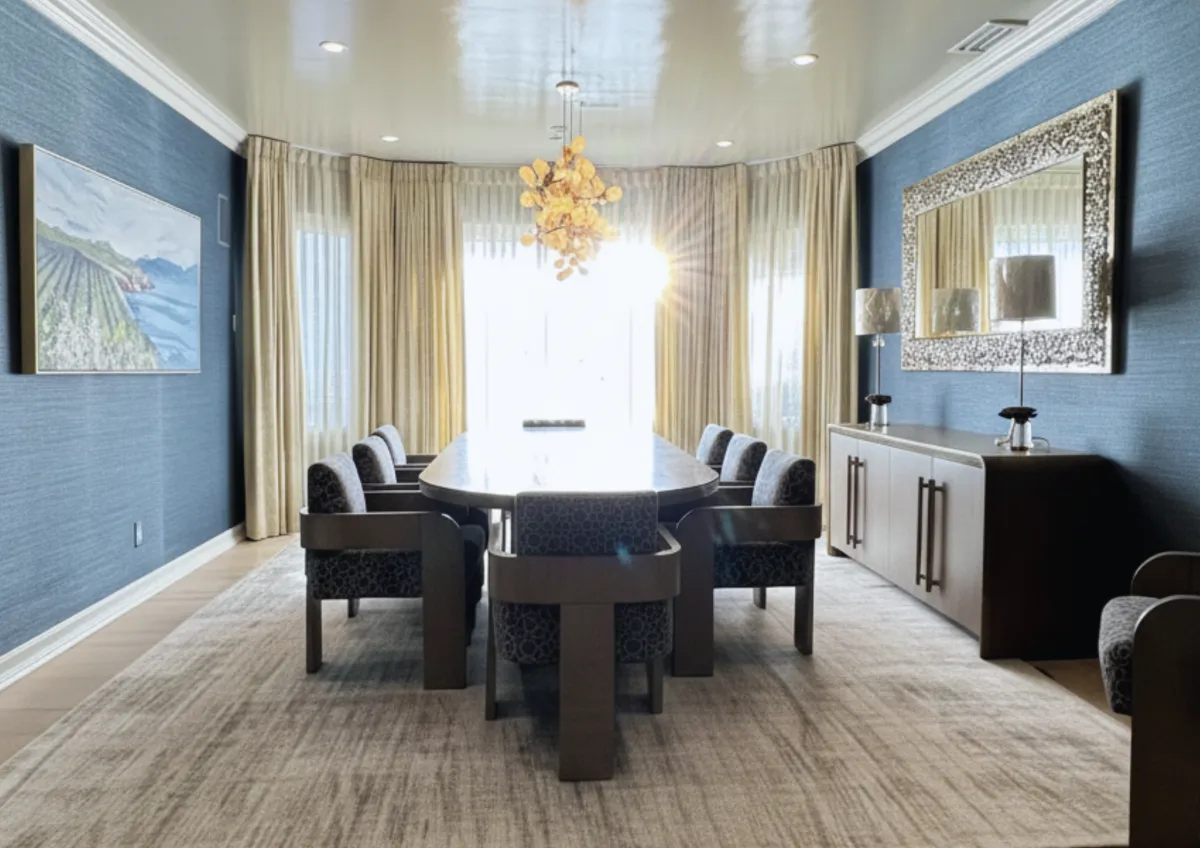
The Secret Ingredient to a Dining Space That Feels Warm Without Using Warm Colors
When designing a dining space, most people think warmth comes from rich color palettes, earthy reds, terracotta tones, and golden beiges. And while those hues certainly set a cozy tone, they’re not the only way to create a warm and welcoming atmosphere. In fact, the real secret to a warm dining room isn’t color, it’s texture.
Why Texture Trumps Temperature
Visual warmth isn’t just about what color you see; it’s about how a space makes you feel. Texture plays a powerful role in this. Think of soft linen drapery, woven wood shades, plush upholstery, and handcrafted finishes. These tactile elements invite you in, creating a sense of comfort even in the coolest-toned palette.
For example, a cool gray dining space with sheer drapes, a rustic wood table, and layered Roman shades in natural fibers can feel just as inviting, if not more, than a room bathed in beige. Why? Because texture adds depth, softness, and soul.
Layered Window Treatments Make the Difference
One of the easiest and most overlooked ways to add texture is through window treatments. A sheer drape with a gentle ripple fold, paired with a woven wood shade or a subtle linen panel, instantly creates a layered look. This not only enhances privacy and light control but also brings tactile warmth without adding visual clutter.
The key is choosing materials that reflect light softly and move gracefully. Even in a minimalist space, drapery can provide the softness and warmth needed to balance more structured, cool elements like stone, glass, or metal.
Play with Matte and Natural Finishes
If your dining room leans into modern, cool tones, look for ways to incorporate matte textures like soft pleats, brushed brass hardware, or even a slubbed fabric finish on drapes. These details prevent the room from feeling flat or sterile. Natural textures like bamboo, rattan, or linen add groundedness that makes the room feel lived-in and cozy without ever touching a warm color on the palette.
The Takeaway? You Can Feel Warm Without “Warm Colors.”
By layering textures and choosing the right materials, you can create a dining space that feels welcoming and intimate, whether your palette is crisp white, soft gray, or deep navy. It’s about feeling, not just color.
Need help styling your dining room in a way that feels soft, elevated, and uniquely you? Let’s design a space that speaks warmth in every detail.
Until next time,
Grace

The Secret Ingredient to a Dining Space That Feels Warm Without Using Warm Colors
When designing a dining space, most people think warmth comes from rich color palettes, earthy reds, terracotta tones, and golden beiges. And while those hues certainly set a cozy tone, they’re not the only way to create a warm and welcoming atmosphere. In fact, the real secret to a warm dining room isn’t color, it’s texture.
Why Texture Trumps Temperature
Visual warmth isn’t just about what color you see; it’s about how a space makes you feel. Texture plays a powerful role in this. Think of soft linen drapery, woven wood shades, plush upholstery, and handcrafted finishes. These tactile elements invite you in, creating a sense of comfort even in the coolest-toned palette.
For example, a cool gray dining space with sheer drapes, a rustic wood table, and layered Roman shades in natural fibers can feel just as inviting, if not more, than a room bathed in beige. Why? Because texture adds depth, softness, and soul.
Layered Window Treatments Make the Difference
One of the easiest and most overlooked ways to add texture is through window treatments. A sheer drape with a gentle ripple fold, paired with a woven wood shade or a subtle linen panel, instantly creates a layered look. This not only enhances privacy and light control but also brings tactile warmth without adding visual clutter.
The key is choosing materials that reflect light softly and move gracefully. Even in a minimalist space, drapery can provide the softness and warmth needed to balance more structured, cool elements like stone, glass, or metal.
Play with Matte and Natural Finishes
If your dining room leans into modern, cool tones, look for ways to incorporate matte textures like soft pleats, brushed brass hardware, or even a slubbed fabric finish on drapes. These details prevent the room from feeling flat or sterile. Natural textures like bamboo, rattan, or linen add groundedness that makes the room feel lived-in and cozy without ever touching a warm color on the palette.
The Takeaway? You Can Feel Warm Without “Warm Colors.”
By layering textures and choosing the right materials, you can create a dining space that feels welcoming and intimate, whether your palette is crisp white, soft gray, or deep navy. It’s about feeling, not just color.
Need help styling your dining room in a way that feels soft, elevated, and uniquely you? Let’s design a space that speaks warmth in every detail.
Until next time,
Grace